

Table of Contents
- What Qualifies as a Non-Surgical Alternative for Chronic Back Pain?
- Spinal Decompression Therapy Benefits for Disc and Nerve Pain
- How Class IV Laser Therapy for Back Pain Works
- MedX Rehabilitation for Spine Health and Stability
- Chiropractic Care for Chronic Pain: What to Expect
- Costs, Insurance, and What to Ask Before You Commit
- How to Choose the Right Non-Surgical Back Pain Program
- Frequently Asked Questions
Last Updated: September 13, 2026
What Qualifies as a Non-Surgical Alternative for Chronic Back Pain?
Non-surgical alternatives for chronic back pain are any structured treatments that relieve pain, restore function, and address the underlying cause of a spinal condition without an operation. At Dr. Gil Center for Back, Neck, and Chronic Pain Relief, we’ve spent over 28 years helping patients explore these options before considering surgery.
Chronic back pain is typically defined as discomfort lasting 12 weeks or longer. Many patients find that a combination of therapies, rather than a single approach, delivers the best results.
Who Tends to Benefit Most
The best candidates for non-surgical alternatives are patients with disc-related pain, sciatica, degenerative disc disease, or muscle and joint dysfunction who have not suffered a severe structural injury. A common mistake is assuming you must “live with it” once pain becomes chronic. In practice, many long-term sufferers respond well to targeted, technology-assisted care.
When Surgery May Still Be the Right Call
Surgery remains appropriate for certain conditions, including progressive neurological weakness, cauda equina syndrome, or significant structural instability. A qualified professional should always evaluate these red flags. For everyone else, exploring non-surgical alternatives for chronic back pain is a sensible first step.
Spinal Decompression Therapy Benefits for Disc and Nerve Pain
Spinal decompression therapy is a non-surgical treatment that gently stretches the spine to create negative pressure within the discs, which may help retract herniations and allow nutrients to flow back into the disc space. Patients with bulging or herniated discs, sciatica, and degenerative disc disease often respond well to this approach.
The spinal decompression therapy benefits that patients report most frequently include reduced leg pain, improved mobility, and less reliance on pain medication. Treatment typically involves a series of sessions on a specialized table, each lasting around 30 to 45 minutes.
What most guides miss is that decompression works best as part of a broader plan. Pairing it with rehabilitation and posture education tends to produce more lasting relief than decompression alone.
How Class IV Laser Therapy for Back Pain Works
Class IV laser therapy for back pain uses high-intensity light energy to penetrate deep into tissue, where it is thought to reduce inflammation and support cellular repair. Sessions are non-invasive and generally take only a few minutes.
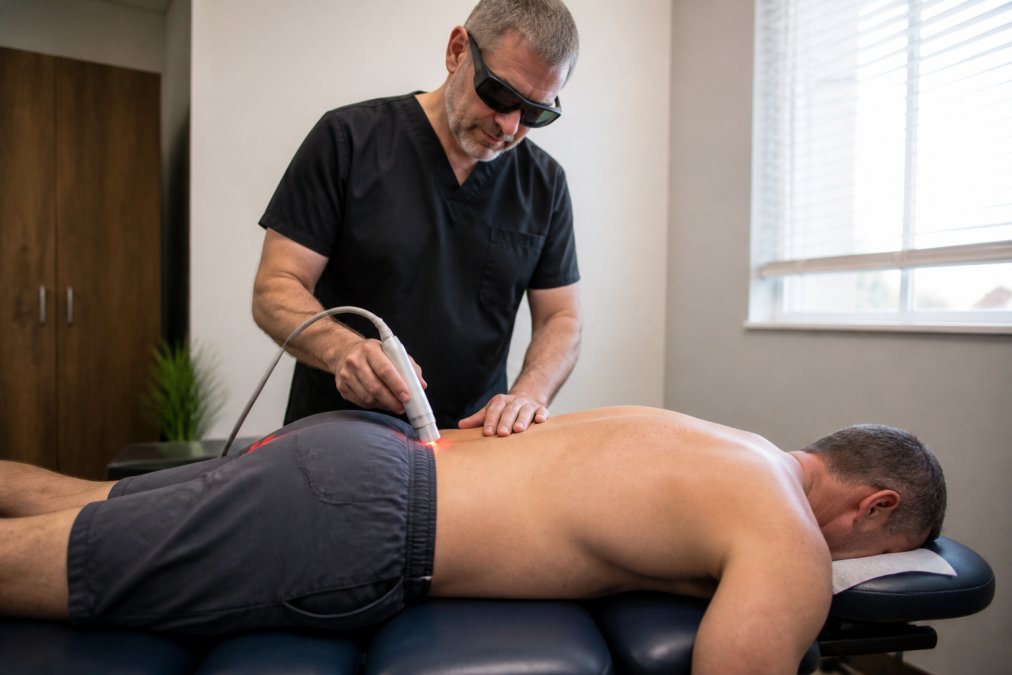
Patients often describe a mild warming sensation during treatment. A typical course involves multiple visits, and results build gradually rather than overnight. The FDA guidance on medical device classifications explains how laser devices are regulated, which is useful context when evaluating any clinic’s claims.
Where it falls short: laser therapy is not a stand-alone cure for structural problems. It works best alongside decompression or rehabilitation.
MedX Rehabilitation for Spine Health and Stability
MedX rehabilitation for spine health is a medically based exercise program that uses specialized equipment to isolate and strengthen the deep spinal muscles. These are the muscles that support the vertebrae and often weaken after years of pain and inactivity.
A common mistake is jumping into generic gym routines that strain the back further. MedX equipment is designed to safely target specific muscle groups with controlled resistance.
The real difference between MedX and ordinary exercise comes down to measurement. Progress is tracked objectively, so your care team can adjust the plan based on data rather than guesswork.
Chiropractic Care for Chronic Pain: What to Expect
Chiropractic care for chronic pain focuses on restoring proper alignment and mobility to the spine, which can reduce nerve irritation and muscle tension. A first visit usually includes a health history, a physical and neurological exam, and a discussion of your goals.
Adjustments are typically gentle and controlled. Some patients feel relief quickly; others need several sessions. The American Chiropractic Association notes that chiropractic care is widely used for musculoskeletal pain.
If you’re coming from physical therapy that didn’t stick, the difference often lies in consistency and combining adjustments with strengthening.
Costs, Insurance, and What to Ask Before You Commit
Pricing for non-surgical back pain care varies widely based on your condition, the therapies involved, and the number of sessions required. At Dr. Gil Center for Back, Neck, and Chronic Pain Relief, we build a plan around your specific needs rather than selling a fixed package.
Because insurance coverage for treatments like spinal decompression and laser therapy varies, ask these questions before committing:
- Is the treatment plan customized to my diagnosis, or standardized?
- How many sessions are recommended, and over what timeframe?
- What does my insurance cover, and what will I owe out of pocket?
- What results should I realistically expect, and when?
The Centers for Medicare & Medicaid Services provides general information on coverage categories, though specific benefits depend on your individual plan.
| Question to Ask | Why It Matters |
|---|---|
| Is the plan personalized? | Ensures care matches your condition |
| How many sessions? | Helps you plan time and budget |
| What’s covered? | Avoids surprise costs |
| Expected timeline? | Sets realistic expectations |
How to Choose the Right Non-Surgical Back Pain Program
Choosing a program comes down to three things: whether the plan is genuinely personalized, whether the provider tracks your progress objectively, and whether the therapies address your specific diagnosis. A clinic that offers the same protocol to every patient is a red flag.
Look for a team that combines multiple approaches, such as decompression, laser therapy, and rehabilitation, and that educates you on lifestyle factors like posture, weight, and movement. Prevention of unnecessary and costly treatments should be a stated goal, not an afterthought.
Frequently Asked Questions
What is the most effective non-surgical treatment for chronic back pain?
There is no single best option, because effectiveness depends on what is causing your pain. For disc-related pain and sciatica, spinal decompression therapy is often used to reduce pressure on compressed discs. Class IV laser therapy for back pain targets inflammation in soft tissue. MedX rehabilitation for spine health builds strength in the muscles that support the spine. Many programs combine these approaches rather than relying on one.
Can chronic back pain be cured without surgery?
Some causes of chronic back pain improve significantly with non-surgical care, while others are managed rather than cured. Conditions like muscle strain, poor posture, and mild disc issues often respond well to chiropractic care for chronic pain, decompression, and guided exercise. Structural problems such as severe spinal stenosis may still require surgical evaluation. A qualified provider can assess your specific situation and explain what is realistic for you.
How does spinal decompression therapy work for back pain?
Spinal decompression uses a motorized table to apply gentle, controlled traction to the spine. This creates negative pressure inside the disc, which can help a bulging or herniated disc draw back toward its normal position and allow nutrients to flow into the area. Sessions typically last 30 to 45 minutes. Most patients need multiple sessions, and results build gradually rather than after one visit.
Will insurance cover non-surgical alternatives for chronic back pain?
Coverage varies widely by plan and provider. Some insurance plans cover chiropractic adjustments and physical rehabilitation but exclude technologies like spinal decompression or Class IV laser therapy. Before starting, ask the clinic for a written explanation of what is covered, what is not, and what your out-of-pocket responsibility would be. You can also call your insurer directly and request the specific billing codes the clinic uses.
Chronic back pain can feel like a problem with no way forward, but surgery is not your only option. At Dr. Gil Center for Back, Neck, and Chronic Pain Relief, our team builds tailor-made treatment plans that combine spinal decompression, Class IV laser therapy, and MedX rehabilitation, backed by over 28 years of experience. Get started with Dr. Gil Center for Back, Neck, and Chronic Pain Relief and take the first step toward lasting relief.


