

Table of Contents
- What MedX Rehabilitation for Back Strength Actually Does
- How MedX Equipment Works to Isolate Spinal Muscles
- MedX Therapy for Back Pain: Treatment Goals and Process
- Using the MedX Lumbar Extension Machine: What Happens During a Session
- MedX Back Rehabilitation Exercises: Building Strength Safely
- Back Strength Testing and Measuring Progress
- Safety, Contraindications, and When to Seek Medical Evaluation
- Treatment Schedule, Duration, and Realistic Expectations
- Frequently Asked Questions
Last Updated: October 10, 2026
What MedX Rehabilitation for Back Strength Actually Does
MedX rehabilitation for back strength is a specialized treatment approach that isolates and strengthens the specific muscles supporting your spine. Unlike general exercise programs, it uses precision equipment to target deep spinal stabilizers that most people never activate in daily life.
The system restrains your body in a controlled position, allowing you to isolate the exact muscles supporting your lower back or neck. Weak spinal stabilizers cause instability, pain, and injury risk. Strengthening them reduces pain and improves function. Building upon this isolated strength requires integrating controlled movement patterns, such as those found in pilates for core stability, to ensure the spine remains supported during everyday activities.
At Dr. Gil Center for Back, Neck, and Chronic Pain Relief, we use MedX equipment as part of a broader treatment plan, combining precise measurement with progressive strengthening over weeks or months.
MedX rehabilitation isolates spinal muscles you can’t reach with standard exercise, then measures your strength gains week by week. This precision is what makes it different from typical physical therapy.
How MedX Equipment Works to Isolate Spinal Muscles
The MedX system uses a specially designed chair and adjustable restraint system to eliminate compensation patterns during exercise through torso stabilization and precise positioning.
The Restraint and Stabilization System
The restraint system locks your torso, pelvis, and thighs in place using padded supports. Your head and neck are also stabilized depending on the exercise. This controlled positioning prevents the common compensation patterns that weaken spinal muscles during typical exercise:
- Hip flexor dominance: The MedX restraint prevents hip movement, forcing deep spinal stabilizers to work instead of allowing hip flexors to compensate.
- Momentum elimination: The machine’s fixed position forces muscles to generate force through contraction alone, eliminating body swing.
- Symmetrical loading: The machine’s design ensures both sides of your spine work equally, preventing one-sided compensation.
Muscle Groups Targeted by Position and Movement
Different machine configurations and movement patterns isolate specific spinal muscles:
- Lumbar extension: You sit with your torso restrained and extend your lower back backward against adjustable resistance. This isolates the erector spinae and multifidus muscles, the deep stabilizers that support your lower spine. The machine measures the force you generate in pounds, giving an objective baseline for your lumbar strength.
- Cervical extension: Your torso is locked and your neck extends backward. This targets the cervical erector spinae and neck stabilizers that support your cervical spine and prevent forward-head posture.
- Lumbar flexion: Forward bending against resistance strengthens the rectus abdominis and transverse abdominis, abdominal muscles that work alongside spinal extensors to stabilize your core.
- Rotation and lateral flexion: Controlled twisting and side-bending movements target oblique muscles that resist rotational forces and lateral stress on your spine.
Why Isolation Matters Clinically
Weak spinal muscles trigger compensation by larger muscles, creating a cycle of poor movement patterns and increased injury risk. The MedX restraint breaks this cycle by forcing weak muscles to work from the first rep. Over weeks, they adapt and strengthen, stabilizing your spine and normalizing movement patterns.
The restraint system adjusts to your body size and exercise type, with padding positioned for support rather than restriction. Setup takes a few minutes and becomes routine by the second or third session.
The restraint system isn’t meant to be uncomfortable. If you feel pinching, numbness, or excessive pressure, tell your provider immediately. Proper positioning should feel like support, allowing you to focus entirely on the muscle contraction.
MedX Therapy for Back Pain: Treatment Goals and Process
MedX therapy for back pain rebuilds the muscular foundation your spine depends on, addressing the root cause of pain rather than masking symptoms. Treatment goals are: reduce pain through improved stability, increase spinal muscle strength, restore normal movement patterns, and prevent future injury.
Treatment begins with assessment: measuring baseline strength, identifying weak muscles, noting pain level and movement limitations, then designing a progressive program tailored to your needs.
Treatment involves sessions spread over weeks, each focusing on controlled exercise and measurement. You’ll feel previously inactive spinal stabilizers working for the first time.
Using the MedX Lumbar Extension Machine: What Happens During a Session
Initial Assessment and Baseline Strength Testing
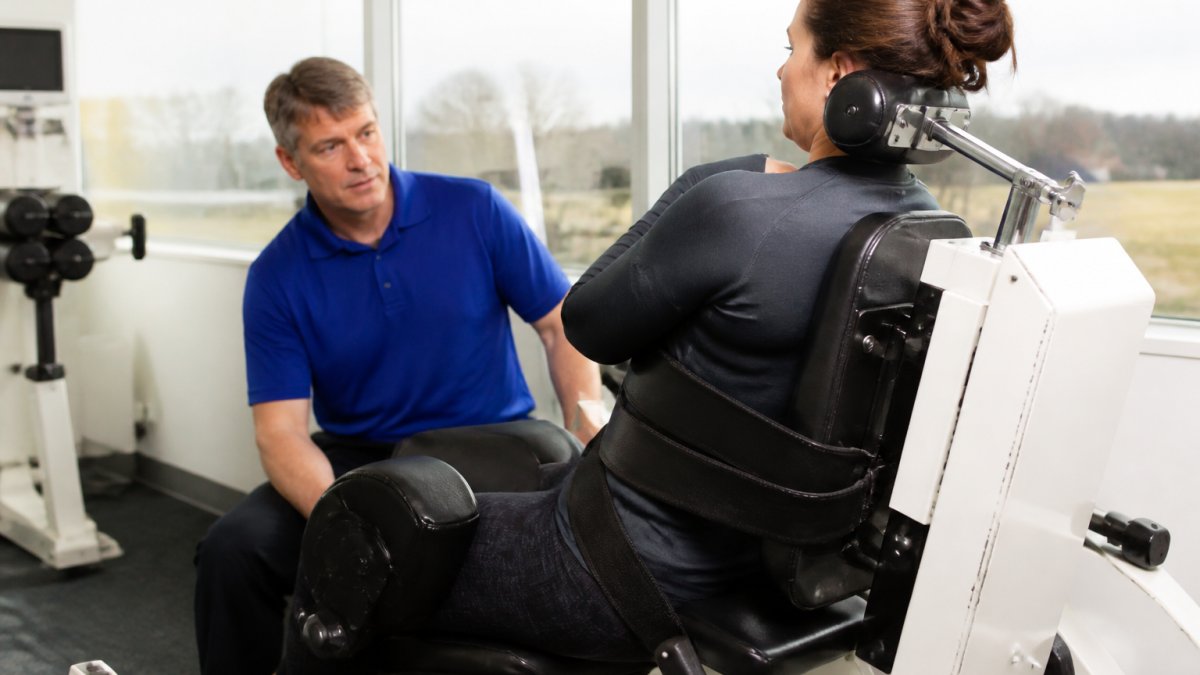
Your first session includes a full assessment measuring baseline lumbar extension strength. You sit in the restraint system, and the machine records the force you generate when extending backward. This baseline provides a starting point for measuring future progress. The test is brief and painless, recording force, range of motion, and pain during movement.
Controlled Exercise Phase
After assessment, strengthening begins with controlled movements in the machine. The restraint system holds your body stable while you extend backward against adjustable resistance. Resistance increases as your strength improves. Each rep is controlled with no momentum, the spinal muscles do the work. A typical session lasts 20-30 minutes with multiple sets and rest periods for recovery.
Progress Measurement and Session Adjustments
At the end of each session, we measure your strength and compare it to baseline and previous sessions, tracking range of motion and pain changes. This data drives adjustments: increasing resistance with strength gains, advancing your program as pain decreases, or modifying the approach if you plateau.
MedX Back Rehabilitation Exercises: Building Strength Safely
MedX exercises are simple in concept but precise in execution. Lumbar extension (the primary movement) activates deep spinal stabilizers. Cervical extension targets neck muscles. Flexion strengthens abdominal muscles supporting the spine. Rotation targets oblique muscles. Progression is gradual: you start light, build gradually, and strength increases week by week as pain typically decreases.
Stop immediately if you feel sharp pain during exercise. Muscle fatigue is normal. Sharp pain is not. Tell your provider if pain occurs. The program should never cause injury.
Back Strength Testing and Measuring Progress
Back strength testing using MedX equipment is objective and repeatable, measuring force in pounds and range of motion in degrees. Testing occurs at baseline and regularly throughout treatment. Most patients see measurable strength gains within 2-3 weeks, with pain often decreasing faster than strength increases. (Source: importance of deep spinal stabilizers)
Progress isn’t always linear, some weeks show bigger gains, others plateau. The overall trend matters more than any single session.
| Measurement | What It Shows | Why It Matters |
|---|---|---|
| Peak force (pounds) | Maximum strength of spinal muscles | Indicates spinal stability capacity |
| Range of motion (degrees) | How far you can safely move | Shows functional improvement |
| Pain rating (1-10 scale) | Subjective pain level | Tracks symptom reduction |
| Session-to-session change | Weekly progress rate | Validates treatment effectiveness |
Safety, Contraindications, and When to Seek Medical Evaluation
MedX rehabilitation is generally safe for most people with back pain. However, acute fractures, severe osteoporosis, recent spinal surgery, certain neurological conditions, and pregnancy may require medical clearance or specialist evaluation before starting.
Watch for warning signs during treatment: sharp pain (different from muscle fatigue), numbness or tingling in legs, dizziness, nausea, or progressive weakness. Most people tolerate MedX rehabilitation well, with mild muscle soreness resolving within a few days. Actual pain or injury is rare with proper program design and supervision.
Seek medical evaluation if pain worsens, if numbness spreads, or if weakness develops. These may indicate a condition requiring different treatment. Your provider can determine whether to modify the program or pursue alternative approaches.
Treatment Schedule, Duration, and Realistic Expectations
Typical Treatment Frequency and Program Length
Most people begin with 2-3 sessions per week, reducing to 1-2 sessions weekly after 4-6 weeks as strength improves.
Realistic Expectations: When You’ll Notice Changes
- Weeks 1-2: You’ll feel muscles working that you’ve never felt before. Mild muscle soreness is normal. Pain may not change yet.
- Weeks 2-4: Most people notice meaningful pain reduction. Movements become easier. Strength measurements show 10-20% improvement from baseline.
- Weeks 4-8: Significant strength gains appear. Pain continues decreasing. Daily activities feel easier.
- Weeks 8-12: Strength gains accelerate. Many reach 40-60% improvement from baseline. Pain is often minimal or resolved.
- Weeks 12-16: Continued improvement at a slower rate, with focus on durability and preventing relapse.
Progress Isn’t Always Linear
Progress in rehabilitation rarely follows a straight upward line. Some weeks show dramatic gains. Other weeks plateau. This is normal and expected. Factors that cause temporary plateaus include:
- Increased stress or poor sleep (which impairs muscle recovery)
- Minor illness or dehydration
- Temporary increase in activity outside the program
- Natural adaptation cycles (your body adapts, then needs a new stimulus)
Your provider tracks these patterns. If you plateau for 2-3 weeks, they’ll adjust resistance, change exercise order, or modify your program to provide a new stimulus.
Measuring Progress: What Your Provider Tracks
Progress is measured objectively, not subjectively. Your provider records:
- Peak force (in pounds): The maximum force your spinal muscles generate during extension or other movements. This is the most reliable indicator of strength gain.
- Range of motion (in degrees): How far you can safely move through a full contraction. Improved range often correlates with reduced pain and better function.
- Pain rating: Your subjective pain level on a 0-10 scale, recorded at baseline and regularly throughout treatment.
- Functional improvements: Ability to perform daily tasks (bending, lifting, sitting for longer periods) without pain or limitation.
These measurements are compared session-to-session and week-to-week. You’ll see the numbers. You’ll know exactly how strong you are and how much you’ve improved.
What Happens After Formal Treatment Ends
Your formal MedX program typically concludes when you’ve reached your functional goals and your strength has plateaued (meaning additional sessions produce minimal new gains).
Maintenance phase: Many people transition to periodic maintenance sessions, typically 1 session every 2-4 weeks, to preserve gains and prevent regression.
Home exercise integration: Your provider will teach you exercises you can do at home to maintain spinal strength between sessions.
Factors That Affect Your Individual Timeline
Your specific timeline depends on multiple variables. Your provider will discuss realistic expectations based on your condition:
- Diagnostic clarity: If the cause of your pain is clear (weak stabilizers, post-injury), progress is often faster and more predictable. If the cause is unclear or multifactorial, timelines are less certain.
- Concurrent conditions: Arthritis, nerve involvement, or other spinal pathology may slow progress or require program modification.
- Medication use: Certain medications can affect muscle recovery or pain perception, potentially altering your timeline.
- Psychological factors: Anxiety, depression, or catastrophic thinking about pain can slow recovery, even with appropriate physical treatment.
Your provider will reassess your progress at 4-6 weeks and again at 8-10 weeks.
Frequently Asked Questions
What is MedX therapy for back rehabilitation?
MedX therapy uses specialized equipment to isolate and strengthen the muscles that support your spine through controlled, measured exercises. The equipment stabilizes your body while your spinal muscles work against resistance, allowing precise tracking of strength gains. This targeted approach addresses the root cause of many back problems: weakness in the muscles supporting the lumbar and cervical spine. Sessions typically include baseline strength testing, controlled exercise, and progress measurement to ensure your treatment stays on track.
How long does MedX rehabilitation typically take to show results?
Results vary depending on the severity of your condition and your starting strength level. Some patients report reduced pain within 2-4 weeks of consistent sessions, while functional improvements in daily activities often take 6-12 weeks. The key is consistency: regular sessions combined with proper form allow your spinal muscles to adapt and strengthen. Your healthcare provider will measure progress through strength testing at regular intervals to confirm you’re moving forward and adjust your treatment plan as needed.
Who is a good candidate for MedX back rehabilitation?
MedX rehabilitation works for adults experiencing low back pain, neck pain, or chronic spinal dysfunction who want to avoid surgery or have not found relief through other conservative treatments. It’s especially effective for those with weak back muscles, degenerative disc disease, or functional limitations in daily activities. However, certain conditions such as acute spinal fractures, severe osteoporosis, or recent spinal surgery may require medical clearance first. A consultation with a qualified healthcare provider is essential to determine whether MedX is appropriate for your specific situation.
Can MedX rehabilitation help with chronic back pain that hasn’t improved with other treatments?
Yes, MedX rehabilitation addresses a common reason other treatments fail: inadequate strengthening of the muscles that stabilize your spine. Many patients try physical therapy or chiropractic care but don’t achieve lasting results because general exercises don’t isolate spinal muscles effectively. MedX’s restraint system and controlled resistance target these deep muscles precisely, allowing them to adapt and support your spine better over time. This targeted approach, combined with progress tracking through strength testing, helps patients achieve functional recovery even after years of chronic pain.


