

Table of Contents
- What Is Laser Therapy for Nerve Pain?
- How Laser Therapy May Relieve Neuropathic Pain
- What to Expect During Laser Therapy Sessions
- Laser Therapy Session Length for Nerve Pain
- Laser Therapy Safety for Neuropathy
- Types of Laser Therapy: Class IV and Cold Laser
- Evidence, Limitations, and When to Seek Medical Evaluation
- Building a Personalized Treatment Plan
- Frequently Asked Questions
Last Updated: October 18, 2026
What Is Laser Therapy for Nerve Pain?
Laser therapy for nerve pain relief is a non-invasive treatment that uses focused light energy to reduce pain and promote healing in damaged or irritated nerves. At Dr. Gil Center for Back, Neck, and Chronic Pain Relief, we use advanced laser technology.
The therapy delivers light energy deep into tissue where nerves are compressed or inflamed, stimulating cellular activity and the body’s natural healing response. Many patients report relief from peripheral neuropathy, sciatica, and chronic nerve pain.
How Laser Light Works at the Cellular Level
When laser light penetrates tissue, it reaches the mitochondria and stimulates them to produce more ATP, the molecule cells use for energy and repair. This increased cellular energy accelerates healing in damaged nerve tissue.
Wavelength determines how deep the light penetrates. Class IV lasers, which we use at Dr.
The light also reduces inflammatory markers, increases blood flow to the affected area, and stimulates protective compounds around nerve fibers. Over multiple sessions, this cumulative effect can reduce nerve pain and restore function.
How Laser Therapy May Relieve Neuropathic Pain
Nerve pain occurs when nerves are compressed, damaged, or irritated. Laser therapy for nerve pain relief addresses this through several mechanisms that work together to restore nerve health.
The therapy reduces the inflammatory response that often accompanies nerve damage. Inflammation around nerves intensifies pain signals and slows healing, so decreasing it removes one of the primary drivers of neuropathic pain.
Inflammation Reduction and Nerve Healing
Irritated nerves send constant pain signals to the brain, creating a cycle of discomfort. Laser therapy interrupts this cycle by calming the inflammatory response and reducing inflammatory compounds in the tissue surrounding the nerve.
As inflammation decreases, the nerve itself can begin to heal. With consistent treatment, the nerve may become less sensitive, pain signals may diminish, and normal function may gradually return.
Tissue repair accelerates because increased cellular energy supports production of the proteins needed to rebuild nerve structure. Healing happens gradually, but the process is cumulative, each session builds on the previous one.
Improved Blood Flow and Oxygen Delivery
Damaged nerves often have poor circulation, which starves them of oxygen and nutrients. Laser therapy stimulates formation of new small blood vessels (angiogenesis), and improved microcirculation delivers more oxygen and nutrients to the healing nerve tissue.
Better blood flow also removes metabolic waste that accumulates in damaged tissue and contributes to pain. As circulation improves, the nerve environment becomes more conducive to healing, which is why relief is often gradual.
What to Expect During Laser Therapy Sessions
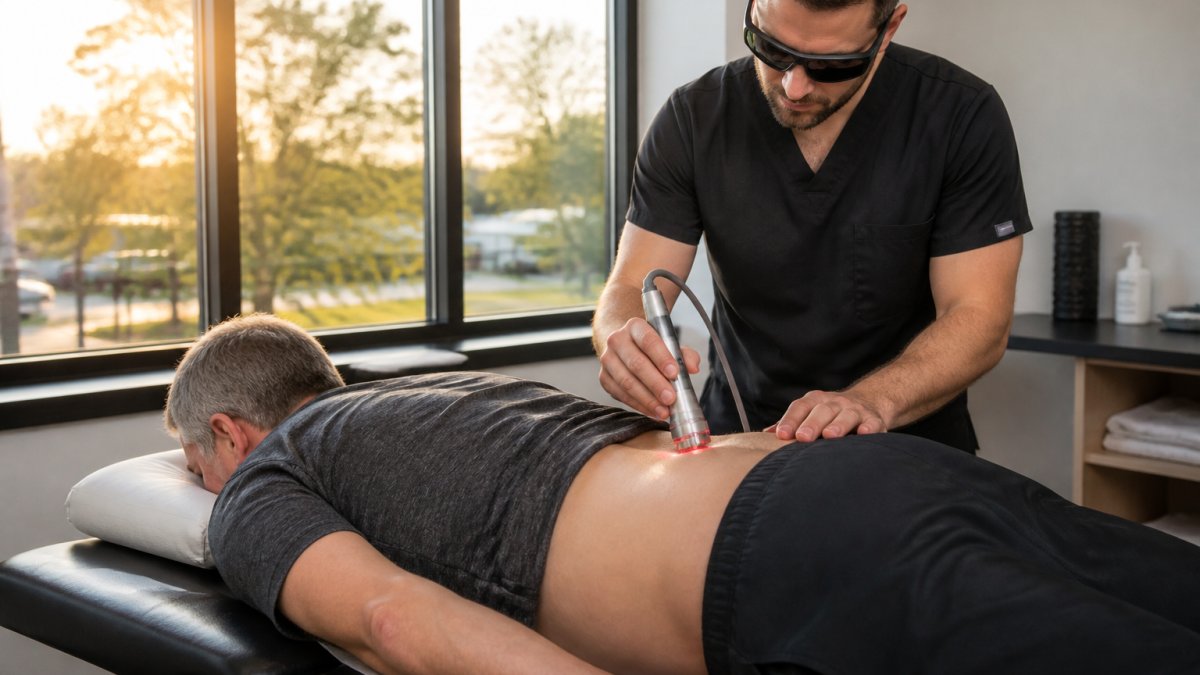
A laser therapy visit is usually short, but a well-run course of treatment includes assessment before and after each session, not just the laser application.
Before Treatment
Your first visit should include a clinical evaluation: a history of your nerve pain, its location and quality, and any red flags warranting further workup. Your provider will identify the target area and confirm there are no contraindications, such as an active infection over the treatment site.
During the Session
You remain clothed except for the area being treated. The provider moves the device slowly across the target tissue or holds it at specific points. You may feel warmth or mild tingling; cold laser devices typically produce little sensation. Most localized sessions run roughly 10 to 20 minutes.
How Progress Is Measured
A credible treatment plan defines what improvement looks like before treatment starts. Common measures include:
- A pain rating on a 0-10 scale recorded before and after each session
- Changes in the quality of pain (burning, tingling, numbness, shooting pain)
- Function-based markers, such as how far you can walk, sit, or stand before symptoms increase
- Sleep quality and how often pain wakes you
Tracking these across sessions shows whether the therapy is helping and whether the dose or schedule should change. A single session is not a reliable test of whether the approach will work for you.
A Realistic Timeline
A common pattern is two to three sessions per week for several weeks, with frequency reduced as symptoms improve. Some patients notice change within the first few sessions; others need a longer trial. Your provider should tell you in advance how many sessions constitute a reasonable trial and what result would justify continuing.
If your nerve pain is severe or rapidly worsening, or you develop sudden weakness, numbness, or loss of function, stop and seek medical evaluation. These signs can indicate a serious underlying condition that laser therapy will not address.
If Symptoms Do Not Improve
Not every patient responds, and a lack of improvement is useful information. If you complete a reasonable trial without meaningful change, the next step is to reassess the diagnosis and treatment plan rather than simply adding sessions, whether that means further evaluation of the underlying cause, a change in treatment parameters, or combining laser therapy with physical therapy or medical management.
After Treatment
There is no downtime, and most people return to normal activities immediately. Mild temporary redness or warmth at the treatment site can occur and typically resolves within hours. Report any skin reaction or increase in pain so the settings can be adjusted.
Laser Therapy Session Length for Nerve Pain
Sessions typically last 10 to 20 minutes, depending on the size of the area treated and the severity of the nerve damage.
Your treatment plan will specify how many sessions you need and how often. Many patients begin with two to three sessions per week, then gradually reduce frequency as symptoms improve. (Source: prevalence of neuropathic pain)
Consistency matters more than duration. Regular sessions over several weeks produce better results than sporadic treatment, steady progress builds through repeated sessions, not longer individual ones.
Laser Therapy Safety for Neuropathy
Laser therapy is non-invasive with a well-established safety profile when administered by trained professionals. The Class IV lasers used at Dr. Gil Center for Back, Neck, and Chronic Pain Relief are FDA-cleared devices designed for therapeutic use.
Side effects are minimal. Some patients experience mild temporary redness or warmth at the treatment site, which resolves within hours. Serious complications are rare when qualified practitioners follow proper protocols.
Certain conditions warrant caution or medical clearance before starting treatment.
Types of Laser Therapy: Class IV and Cold Laser
Laser therapy devices are often sorted by class, but the class label describes electrical power output and safety requirements, not proof of clinical effectiveness. Two devices in the same class can produce very different biological effects depending on wavelength, power, dose, and treatment technique.
What the Parameters Actually Mean
Wavelength (measured in nanometers, nm) determines how deep light penetrates and which tissue components absorb it. Shorter red-band wavelengths are absorbed more at the skin surface; longer near-infrared wavelengths penetrate deeper into muscle and nerve tissue.
Power is the rate of energy delivery, measured in watts (W) or milliwatts (mW). Higher power does not automatically mean a better outcome; it changes how quickly a given dose can be delivered and how much heat is produced.
Dose is the total energy delivered to a given area, usually expressed in joules (J) or joules per square centimeter (J/cm²). A common clinical range for photobiomodulation is roughly 1 to 10 J/cm² per treatment point, though protocols vary by device and condition (pubmed.ncbi.nlm.nih.gov).
Irradiance (power density, W/cm²) and treatment time together determine dose. This is why two sessions that both last 15 minutes can deliver very different amounts of energy.
Class IV Versus Cold Laser in Practice
Class IV (high-power) devices deliver higher output, often in the hundreds of milliwatts to several watts, and can treat larger areas in less time. They may produce mild therapeutic warmth.
Cold laser / low-level laser therapy (LLLT) devices use lower output, typically under 500 mW, and produce little to no heat. They often require longer treatment times or more treatment points to reach a comparable dose.
Both approaches rely on the same proposed mechanism, photobiomodulation, in which light energy is absorbed by mitochondrial structures and is thought to influence cellular energy production and signaling.
Ask your provider what wavelength, power, and dose they plan to use and how they will measure your response. A device’s class is a safety and power designation; the treatment parameters are what determine whether the therapy is appropriate for your nerve pain.
What the Evidence Does and Does Not Show
Clinical studies of photobiomodulation for nerve pain vary widely in device, wavelength, dose, and outcome measures, which makes head-to-head comparison difficult. Some trials report reduced pain and improved function in conditions such as diabetic peripheral neuropathy and localized nerve compression; others show modest or inconsistent effects (pubmed.ncbi.nlm.nih.gov). The evidence is best described as promising but not uniform, and results should not be assumed to apply to every cause of nerve pain.
Evidence, Limitations, and When to Seek Medical Evaluation
Laser therapy shows promise for nerve pain relief, particularly for peripheral neuropathy and localized nerve compression. Many patients report improvement in pain, numbness, and function, though the strength of evidence varies by condition.
Research on laser therapy for nerve pain is ongoing. Some studies show significant benefits, while others show modest improvements.
Laser therapy works best when combined with other approaches. Some patients benefit from combining laser therapy with other treatments like spinal decompression or therapeutic ultrasound.
Seek medical evaluation if:
- Your nerve pain is severe or rapidly worsening
- You experience sudden weakness, numbness, or loss of function
- Your symptoms suggest a serious underlying condition like spinal cord compression
- You have unexplained weight loss or other systemic symptoms accompanying nerve pain
- Your pain persists despite treatment
A qualified healthcare provider can determine whether laser therapy is appropriate for your specific situation and whether other conditions need to be ruled out first.
Building a Personalized Treatment Plan
Effective nerve pain treatment requires a customized approach, because nerve pain has many different causes. At Dr.
Your plan begins with a thorough evaluation.
Treatment plans evolve as you progress. Early sessions focus on reducing acute pain and inflammation; as you improve, we shift emphasis toward rebuilding function and preventing recurrence.
The goal is not just pain relief, it’s restoring your quality of life, reducing pain, improving function, and giving you tools to maintain your recovery long-term.
Many people find relief through targeted laser therapy combined with personalized care. Dr.
Frequently Asked Questions
Can laser therapy help relieve nerve pain?
Laser therapy may help relieve nerve pain by improving blood flow to affected areas, reducing inflammation, and supporting cellular repair in nerve tissue. The treatment works by delivering light energy that stimulates healing at the cellular level. Results vary depending on the underlying cause of nerve pain, treatment frequency, and individual factors. A qualified healthcare provider can evaluate whether laser therapy is appropriate for your specific condition and discuss realistic outcomes based on clinical evidence.
What happens during a laser therapy session for nerve pain?
During a laser therapy session, a healthcare provider positions the laser device directly over the affected area and applies light energy to the skin. You may feel mild warmth or a gentle tingling sensation, but the treatment is non-invasive and typically painless. The provider may move the device across the treatment area to ensure even coverage. Sessions are performed in an outpatient clinical setting, and you can resume normal activities immediately afterward. The exact procedure depends on your condition and the type of laser being used.
Is laser therapy safe for peripheral neuropathy?
Laser therapy is generally considered a low-risk, non-invasive treatment option for peripheral neuropathy when administered by qualified healthcare professionals. The procedure does not require surgery or medication, reducing certain risks associated with other treatments. However, safety depends on proper device calibration, appropriate wavelength selection, and correct application to the affected area. People with certain conditions, such as active infections, cancer, or light-sensitive medications, may not be suitable candidates. Discuss your full medical history with your provider to determine if laser therapy is safe for your neuropathy.
How many laser therapy sessions may be needed for neuropathy?
The number of laser therapy sessions needed for neuropathy varies based on the severity of nerve damage, the underlying cause, and how your body responds to treatment. Some patients notice symptom reduction within a few sessions, while others require ongoing treatment over weeks or months to achieve measurable improvement. A personalized treatment plan developed by your healthcare provider will outline the recommended frequency and duration of sessions. Regular monitoring helps determine if the treatment is effective and whether adjustments to the protocol are needed.


