

Table of Contents
- What Is Spinal Decompression Therapy and How Does It Work
- Non-Surgical Spinal Decompression Benefits for Chronic Pain
- Spinal Decompression Therapy Recovery Time and What to Expect
- Spinal Decompression vs Physical Therapy: Which Is Right for You
- Conditions That Respond Well to Spinal Decompression
- Potential Risks and Realistic Outcomes
- Is Spinal Decompression Therapy Worth the Investment
- Frequently Asked Questions
Last Updated: October 2, 2026
What Is Spinal Decompression Therapy and How Does It Work
Spinal decompression therapy is a non-surgical treatment designed to relieve pressure on compressed nerves in the spine by gently stretching the vertebral column. The procedure uses mechanical or motorized equipment to create negative pressure within the disc space, potentially allowing bulging or herniated discs to retract and reduce nerve compression.
During a typical session, you lie on a specialized table while a motorized system applies controlled traction to your spine. The equipment gradually increases and decreases tension in cycles, typically lasting 20-30 minutes per treatment. This rhythmic stretching creates space between vertebrae, which may allow nutrient-rich fluid to flow back into damaged discs and relieve pressure on adjacent nerves.
The therapy works on a simple biomechanical principle: by reducing intradiscal pressure, the treatment creates an environment where healing can occur. When discs are compressed, they lose hydration and structural integrity. Decompression reverses this process by allowing water and nutrients to rehydrate the disc material. At Dr. Gil Center for Back, Neck, and Chronic Pain Relief, we integrate spinal decompression with other advanced therapies like Class IV laser therapy to enhance tissue repair and accelerate recovery.
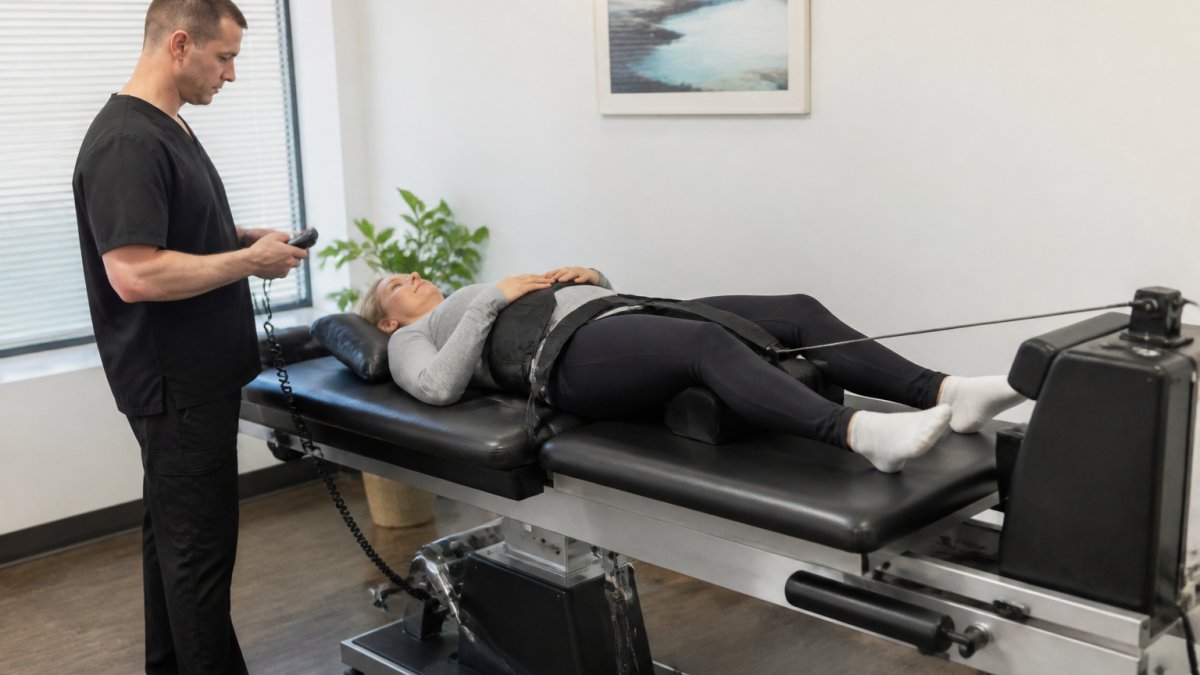
Different conditions respond differently to decompression. Some patients experience relief within the first few sessions, while others require consistent treatment over several weeks before noticing improvement. The key is that decompression creates the mechanical conditions for healing, it doesn’t force healing itself.
Non-Surgical Spinal Decompression Benefits for Chronic Pain
Non-surgical spinal decompression offers several meaningful benefits for individuals with chronic back and neck pain. Unlike surgical intervention, decompression preserves your natural spine structure and carries no surgical risks like infection or anesthesia complications.
Many patients find that decompression provides pain relief without the side effects associated with long-term pain medications. Rather than masking symptoms, the therapy addresses an underlying mechanical problem, nerve compression. When pressure releases, pain often follows naturally. This approach aligns with what research from the American College of Physicians emphasizes: mechanical treatments that restore function often outperform symptom-only interventions for chronic conditions.
Another significant benefit is improved mobility and function. Chronic back pain typically restricts movement and activity. As decompression reduces nerve irritation, patients often regain the ability to move, exercise, and perform daily activities without limitation. This functional improvement often translates to better quality of life, returning to work, hobbies, and physical activity that pain previously prevented.
For individuals skeptical about surgery or wanting to avoid it, spinal decompression therapy represents a meaningful alternative. The treatment requires no recovery time, no time away from work, and no permanent changes to your spine structure. You can receive treatment and return to normal activities the same day.
Spinal Decompression Therapy Recovery Time and What to Expect
Spinal decompression therapy requires minimal recovery time compared to surgical procedures. Most patients experience no downtime, you can return to work and normal activities immediately after each session. The treatment itself is non-invasive and doesn’t create tissue trauma that demands healing.
Typical treatment protocols involve sessions two to five times per week over four to twelve weeks, depending on your condition’s severity and how your body responds. Some patients notice improvement within the first week or two, while others require several weeks of consistent treatment before symptoms diminish. This variation is normal and reflects individual differences in disc hydration, nerve sensitivity, and overall healing capacity.
During treatment sessions, you may feel gentle stretching sensations in your spine. Most people describe the experience as comfortable or neutral rather than painful. Some patients report immediate relief during or shortly after sessions, while others notice gradual improvement over the course of their treatment plan.
Between sessions, follow-up care matters significantly. Lifestyle modifications, proper posture, core strengthening exercises, and ergonomic adjustments, support the mechanical improvements created by decompression. Dr. Gil Center for Back, Neck, and Chronic Pain Relief emphasizes patient education about these supporting habits because decompression therapy works best when combined with active participation in your recovery.
Spinal Decompression vs Physical Therapy: Which Is Right for You
Both spinal decompression and physical therapy address back pain, but they work through different mechanisms. Physical therapy focuses on strengthening muscles, improving flexibility, and correcting movement patterns that contribute to pain. Decompression therapy directly addresses mechanical nerve compression by reducing intradiscal pressure.
The choice between these approaches depends on your specific condition. If your pain stems primarily from muscle weakness, poor posture, or movement dysfunction, physical therapy may be sufficient. If imaging shows disc herniation or bulging that compresses nerves, decompression therapy directly targets that mechanical problem.
Many patients benefit from combining both approaches. Decompression therapy relieves acute nerve compression and pain, while physical therapy rebuilds strength and prevents future episodes. This integrated approach addresses both the immediate mechanical problem and the underlying weakness that contributed to it. According to the Journal of the American Medical Association, combined mechanical and rehabilitative approaches show better long-term outcomes than either treatment alone.
Some individuals try physical therapy first and find insufficient relief because their pain has a strong mechanical component, disc bulging or herniation, that muscle strengthening cannot resolve. In these cases, adding decompression therapy often provides the breakthrough needed. The therapy essentially creates the mechanical foundation that physical therapy then builds upon.
Conditions That Respond Well to Spinal Decompression
Spinal decompression therapy shows favorable outcomes for several specific conditions involving nerve compression. Herniated or bulging discs, where disc material protrudes and presses on nerves, respond well because decompression directly reduces the pressure causing symptoms.
Sciatica, characterized by pain radiating down the leg from nerve compression in the lower spine, often improves significantly with decompression. By relieving pressure on the sciatic nerve, the therapy addresses the root cause rather than just managing pain symptoms. Patients with sciatica frequently report reduced leg pain, numbness, and tingling within weeks of starting treatment.
Degenerative disc disease, where discs lose hydration and structural integrity over time, also responds to decompression. The therapy helps restore disc hydration and reduces the inflammation that accompanies degeneration. Stenosis, narrowing of the spinal canal that compresses nerves, can improve when decompression reduces pressure within the canal.
Cervical radiculopathy, or neck pain with radiating arm symptoms from nerve compression, responds well to cervical decompression. The controlled stretching relieves pressure on cervical nerves and allows inflammation to decrease.
Conditions that don’t involve direct nerve compression, such as muscle strains or purely postural dysfunction, may not benefit significantly from decompression alone. This is why accurate diagnosis matters. Imaging studies help determine whether your pain has a mechanical compression component that decompression can address.
Potential Risks and Realistic Outcomes
Spinal decompression therapy carries minimal risks compared to surgical procedures. The treatment is non-invasive and doesn’t involve incisions, anesthesia, or tissue damage. Serious complications are rare. Some patients experience temporary increased soreness or muscle fatigue during the first week of treatment as their spine adjusts to the new mechanical stimulus, this typically resolves quickly.
Realistic expectations matter significantly. Decompression therapy works well for many patients, but not universally. Some individuals experience complete pain relief, while others see partial improvement. A small percentage notice minimal change. Individual factors, disc hydration, nerve sensitivity, overall health, age, and lifestyle habits, influence outcomes.
The therapy works best when combined with lifestyle modifications. Patients who maintain proper posture, stay active, and follow core-strengthening recommendations experience better long-term results than those who rely solely on decompression sessions. Think of decompression as creating the mechanical opportunity for healing; your daily habits determine whether that opportunity translates into lasting recovery.
Insurance coverage varies significantly. Some plans cover decompression therapy when supported by imaging evidence of nerve compression, while others classify it as experimental. Understanding your coverage before starting treatment prevents financial surprises. Dr. Gil Center for Back, Neck, and Chronic Pain Relief can discuss coverage options during your consultation.
Is Spinal Decompression Therapy Worth the Investment
Whether spinal decompression therapy represents a worthwhile investment depends on your specific situation, the severity of your condition, and what alternatives you’ve already tried. For individuals with confirmed nerve compression who have not found relief through conservative treatments, decompression therapy offers a non-surgical option that avoids the risks and recovery time of surgery.
| Treatment Approach | Best For | Recovery Time | Typical Duration |
|---|---|---|---|
| Spinal Decompression | Nerve compression, herniated discs, sciatica | None (same-day return to activity) | 4-12 weeks, 2-5 sessions weekly |
| Physical Therapy | Muscle weakness, poor posture, movement dysfunction | Gradual (progressive strengthening) | 6-12 weeks, 2-3 sessions weekly |
| Combined Approach | Complex pain with both compression and weakness | Minimal (sessions don’t prevent activity) | 8-16 weeks, varied frequency |
| Surgical Intervention | Severe compression unresponsive to conservative care | 6-12 weeks (significant downtime) | One-time procedure plus recovery |
Frequently Asked Questions
What conditions does spinal decompression therapy treat?
Spinal decompression therapy is used for herniated discs, degenerative disc disease, sciatica, and chronic neck or lower back pain. It works by gently stretching the spine to reduce pressure on nerve roots and discs. Not all back pain responds equally, conditions where a disc is compressing a nerve typically show the most improvement. A qualified healthcare professional can determine whether your specific condition is a good candidate for this approach.
How many sessions of spinal decompression therapy are typically needed?
Treatment plans vary based on your condition severity and response to therapy. Most patients undergo multiple sessions over several weeks, with sessions typically lasting 20 to 45 minutes. Your provider will create a personalized plan and monitor your progress to adjust frequency and duration as needed. Some patients see improvement within the first few weeks, while others require a longer course of treatment.
How does spinal decompression differ from traditional chiropractic adjustments?
Spinal decompression uses motorized equipment to gently stretch the spine and reduce disc pressure, while traditional chiropractic adjustments involve manual manipulation of vertebrae. Decompression is a slower, more controlled process targeting specific disc problems, whereas adjustments address joint mobility and alignment. Some patients benefit from combining both approaches as part of a comprehensive treatment plan tailored to their needs.
Is spinal decompression therapy covered by insurance in Tennessee?
Insurance coverage for spinal decompression therapy varies by plan and provider. Some insurance companies cover it when deemed medically necessary, while others classify it as experimental or elective. Contact your insurance provider directly to understand your coverage, or ask your healthcare provider’s office about coverage verification. Understanding your benefits before starting treatment helps you plan financially and avoid unexpected costs.


