

Table of Contents
- Understanding Chronic Back Pain and Its Causes
- Exercises for Chronic Lower Back Pain Relief
- Heat or Ice for Back Pain: Which Works Best
- Sleeping Positions for Back Pain and Better Rest
- Lifestyle Changes to Manage Pain at Home
- When to See a Doctor for Back Pain
- Frequently Asked Questions
Last Updated: October 9, 2026
Understanding Chronic Back Pain and Its Causes
Chronic back pain affects millions of adults and can significantly impact daily life (the CDC). At Dr. Gil Center for Back, Neck, and Chronic Pain Relief, we work with patients every day who want to treat chronic back pain at home before considering more invasive options. Understanding what causes your pain is the first step toward managing it effectively.
Chronic back pain typically develops from muscle strain, poor posture, degenerative disc disease, or injury. Unlike acute pain that appears suddenly, chronic pain persists for weeks or longer. It can stem from repetitive movements, sedentary work habits, or past injuries that haven’t fully healed.
The good news: many people find relief through home-based strategies. Movement, proper sleeping positions, heat or ice therapy, and lifestyle adjustments can reduce pain significantly. The key is consistency and finding what works for your specific situation.
Start tracking your pain patterns. Note what makes it better or worse, certain activities, times of day, or positions. This information helps you identify which home treatments will work best for you.
Exercises for Chronic Lower Back Pain Relief
Regular movement is one of the most effective ways to treat chronic back pain at home. Exercise strengthens the muscles that support your spine and improves flexibility. The goal isn’t to push through severe pain, but to move gently and progressively.
Most people see better results when they combine stretching with core strengthening. This two-part approach addresses both flexibility and stability. Start slowly, especially if you’ve been inactive.
Gentle Stretching and Flexibility Work
Stretching reduces muscle tightness and improves your range of motion. Hold each stretch for 20-30 seconds without bouncing. Perform stretches on both sides of your body.
Effective stretches for lower back pain include:
- Knee-to-chest stretch: Lie on your back, pull one knee toward your chest, hold, then switch sides
- Hamstring stretch: Lie on your back with one leg bent, pull the other leg toward your chest with a towel around the foot
- Cat-cow stretch: On hands and knees, alternate between arching and rounding your spine slowly
- Piriformis stretch: Lie on your back, cross one ankle over the opposite knee, pull the bottom leg toward your chest
- Child’s pose: Kneel, sit your hips back toward your heels, reach your arms forward
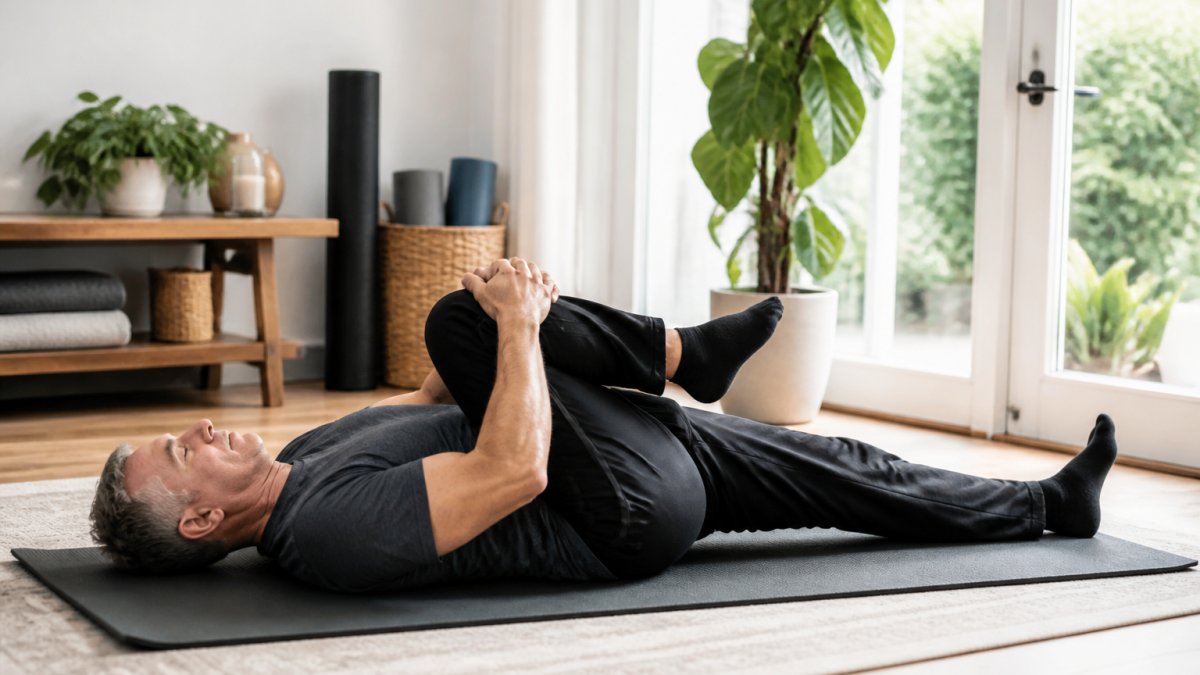
Perform these stretches daily, ideally in the morning and evening. Many people find that consistent stretching reduces stiffness and improves comfort throughout the day.
Core Strengthening Exercises
A strong core stabilizes your spine and reduces strain on back muscles. Core work doesn’t mean intense sit-ups. Gentle, controlled movements build strength without aggravating pain.
Start with these foundational exercises:
- Pelvic tilts: Lie on your back with knees bent, gently tilt your pelvis to engage your core, hold 5 seconds, repeat 10 times
- Bridges: Lie on your back with knees bent, lift your hips toward the ceiling, hold 2-3 seconds, lower slowly, repeat 10 times
- Dead bugs: Lie on your back, extend one arm overhead while straightening the opposite leg, return, alternate sides, 10 repetitions per side
- Bird dogs: On hands and knees, extend one arm and opposite leg, hold 3 seconds, return, alternate, 10 per side
- Planks (modified): On forearms and knees instead of toes, hold for 10-20 seconds, build gradually
Perform core exercises 3-4 times per week. Rest at least one day between sessions to allow muscles to recover. Consistency matters more than intensity.
The best exercise for chronic back pain is one you’ll actually do. Start with just 2-3 exercises and build your routine gradually. This prevents burnout and increases the chances you’ll stick with it.
Heat or Ice for Back Pain: Which Works Best
Both heat and ice can relieve back pain, but they work differently. Choosing the right one depends on your situation and how your body responds.
Ice therapy works best for acute inflammation and swelling. Use ice for the first 48 hours after an injury. Apply ice for 15-20 minutes at a time, several times daily. Ice numbs pain and reduces inflammation. Once the initial inflammation subsides, transitioning to gentle massage therapy techniques can help restore mobility and alleviate the lingering tension that often follows an acute flare-up.
Heat therapy works better for stiffness and chronic muscle tension. Heat increases blood flow and relaxes tight muscles. Use heat for chronic pain that’s been present for weeks or longer. Apply heat for 15-20 minutes, several times daily.
Many people find that alternating between heat and ice provides the most relief. Try heat in the morning to loosen stiffness, then ice after activity if needed. Pay attention to how your body responds and adjust accordingly.
Never apply heat or ice directly to bare skin. Wrap ice packs in a towel and use a cloth barrier between heat pads and skin. Limit each session to 20 minutes to prevent skin damage.
Sleeping Positions for Back Pain and Better Rest
Poor sleep position aggravates back pain. Adjusting how you sleep can dramatically reduce morning stiffness and nighttime discomfort.
The best sleeping positions for back pain are:
- Back sleeping with pillow support: Place a pillow under your knees to maintain the natural curve of your spine. This position distributes weight evenly.
- Side sleeping with pillow between knees: Place a pillow between your knees to keep your spine aligned. This prevents your top leg from pulling your spine out of position.
- Avoid stomach sleeping: This position twists your neck and spine, increasing strain.
Your mattress matters too. A medium-firm mattress provides better support than very soft or very hard surfaces (What type of mattress should be chosen to avoid back pain and improve sleep quality?…). If your current mattress sags or feels uncomfortable, consider replacing it.
Pillows should support your neck without forcing your head too high. Your neck should stay neutral, aligned with your spine.
Make sleep position changes gradually. It takes time for your body to adjust to a new position. Be patient as you find what works best for you.
Lifestyle Changes to Manage Pain at Home
Beyond exercises and sleep, daily habits significantly impact chronic back pain. Small adjustments compound over time.
Improve your posture throughout the day. Sit with your shoulders back, chest open, and feet flat on the floor. When standing, distribute weight evenly on both feet. Poor posture strains your back muscles and aggravates pain.
Stay active but avoid high-impact activities. Walking, swimming, and cycling are gentle options that keep you moving without jarring your spine. Aim for 30 minutes of moderate activity most days (the CDC).
Manage your weight if needed. Extra weight increases stress on your spine and back muscles. Even modest weight loss reduces pain for many people.
Reduce stress through relaxation techniques. Stress tightens muscles and intensifies pain perception. Try deep breathing, meditation, or gentle yoga.
Lift correctly when moving objects. Bend at your knees, not your back. Keep objects close to your body. Avoid twisting while holding weight.
Take breaks from sitting or standing. Change positions frequently. Prolonged static posture increases pain.
Create an ergonomic workspace if you work at a desk. Position your monitor at eye level, keep your keyboard at elbow height, and use a chair that supports your lower back. Small adjustments prevent hours of daily strain.
When to See a Doctor for Back Pain
Most cases of chronic back pain improve with home treatment within a few weeks. However, certain situations require professional evaluation.
See a doctor if you experience:
- Severe pain that doesn’t improve with rest or over-the-counter treatment
- Pain that radiates down your leg or causes numbness or tingling
- Pain following a fall or injury
- Unexplained weight loss along with back pain
- Pain accompanied by fever or chills
- Loss of bladder or bowel control
- Weakness in your legs or feet
A healthcare provider can diagnose the underlying cause of your pain through examination and imaging if needed. They may recommend physical therapy, prescription medication, or specialized treatments.
At Dr. Gil Center for Back, Neck, and Chronic Pain Relief, our team evaluates each patient individually to develop a personalized treatment plan. We offer advanced therapies including spinal decompression, Class IV laser therapy, therapeutic ultrasound, and dry needling for patients who need more than home care.
Early professional evaluation prevents complications and identifies serious conditions that require prompt treatment. Don’t wait if your pain is severe or worsening.
Chronic back pain doesn’t have to control your life. Many people successfully treat chronic back pain at home using consistent stretching, core strengthening, proper sleep positioning, and lifestyle adjustments. Start with the exercises and habits that feel manageable for you, then build gradually. If home treatment isn’t providing relief after several weeks, or if your pain worsens, reach out to Dr. Gil Center for Back, Neck, and Chronic Pain Relief to explore personalized treatment options. Our team has helped patients regain comfort and mobility through tailored care plans that address your specific needs. Make An Appointment today and take the first step toward lasting relief.
Frequently Asked Questions
What exercises are safe for chronic back pain?
Low-impact exercises like walking, swimming, and gentle stretching are generally safe for chronic back pain. Start slowly and focus on movements that don’t increase pain. Core-strengthening exercises, done correctly, help support your spine. Always stop if you feel sharp pain, and consult a healthcare provider before starting any new exercise program to ensure it matches your specific condition.
Is heat or ice better for chronic back pain?
Heat works well for stiffness and muscle tension, while ice helps reduce inflammation and acute flare-ups. Many people find heat more soothing for chronic pain. Apply heat for 15-20 minutes at a time using a heating pad or warm bath. If you experience swelling, ice may be more effective. Pay attention to what your body responds to and adjust accordingly.
When should I see a doctor for chronic back pain?
Seek professional medical attention if pain persists beyond 4-6 weeks, worsens despite home treatment, radiates down your legs, causes numbness or weakness, or follows an injury. Also consult a doctor if pain disrupts sleep, limits daily activities significantly, or you develop new symptoms. A healthcare provider can identify underlying causes and recommend treatments beyond home care.
How long does it take for chronic back pain to improve with home treatment?
Improvement varies based on the cause and severity of your pain. Some people notice relief within 2-4 weeks of consistent exercise and lifestyle changes, while others may need several months. Chronic pain often requires patience and persistence with multiple approaches. Combining exercises, proper sleep position, heat therapy, and posture correction typically produces better results than relying on a single method.


