

Table of Contents
- Understanding Dry Needling and Why Expertise Matters
- Verify Dry Needling Qualifications and Credentials
- Key Questions to Ask Before Your First Appointment
- What to Expect from Dry Needling Treatment
- Dry Needling vs. Acupuncture: Understanding the Difference
- Evaluating Treatment Plans and Experience
- Taking the Next Step
- Frequently Asked Questions
Last Updated: October 8, 2026
Understanding Dry Needling and Why Expertise Matters
Dry needling is a technique where a qualified practitioner inserts a thin needle into muscle tissue to relieve pain and improve function. It’s different from acupuncture, though the tools look similar. The key difference lies in training, approach, and what the research supports.
Finding the right dry needling expert in Franklin matters more than you might think. A skilled practitioner understands anatomy deeply. They know how to locate trigger points accurately. They understand how your body responds to treatment.
At Dr. Gil Center for Back, Neck, and Chronic Pain Relief, we’ve worked with patients seeking relief from chronic pain. Many arrive after trying other approaches. The difference a qualified expert makes is substantial.
This guide walks you through exactly how to find a dry needling expert in Franklin and what to look for. We’ll cover credentials, questions to ask, and red flags to avoid.
Verify Dry Needling Qualifications and Credentials
Certification and Licensing Requirements
A qualified dry needling expert in Franklin should hold specific credentials. This isn’t optional, it’s essential. Dry needling requires detailed knowledge of anatomy and needle technique.
Look for practitioners who hold certifications from recognized organizations. The most common credential is certification through organizations that specifically train in dry needling methodology. These programs typically require substantial classroom hours plus hands-on practice.
Your practitioner should be licensed in their primary profession. This might be physical therapy, chiropractic care, or nursing. Licensure varies by profession, but it indicates they’ve met state requirements and passed examinations.
Ask directly: “What certification do you hold in dry needling?” A qualified expert will answer immediately and provide details about their training program.
Training Hours and Continuing Education
Dry needling requires more than a weekend workshop. Comprehensive training programs involve hundreds of hours of instruction and practice. A practitioner should be able to tell you exactly how many hours they completed.
Beyond initial certification, ongoing education matters. Medicine and technique evolve. Practitioners committed to excellence pursue continuing education regularly. Ask about their recent training or courses they’ve completed in the past year.
Many states require continuing education for licensed practitioners to maintain their licenses. This is a good baseline, but the best practitioners exceed minimum requirements. They attend conferences, take advanced courses, and stay current with research.
Key Questions to Ask Before Your First Appointment
Before booking an appointment, call and ask these specific questions. A knowledgeable practitioner will answer thoroughly and patiently.
“How long have you been performing dry needling?”
Experience matters. You want someone who’s treated diverse cases and refined their technique over time.
“What conditions do you typically treat with dry needling?”
Listen carefully to the answer. If they claim dry needling fixes everything, that’s a red flag. Honest practitioners know dry needling works well for certain conditions, muscle tension, trigger points, some types of pain, but not all problems.
“Can you explain your evaluation process?”
A thorough practitioner performs an assessment before treatment. They’ll ask about your medical history, current symptoms, and previous treatments. They’ll perform physical tests to understand your specific situation.
“How many sessions do you typically recommend?”
Treatment plans vary based on individual needs. Someone claiming everyone needs exactly five sessions isn’t thinking about your specific situation. A personalized approach means recommendations differ from person to person.
“What should I expect during and after treatment?”
You deserve to know what happens. Will you feel the needle? How long does treatment take? What sensations are normal? What side effects might occur? Clear answers show the practitioner communicates well.
“Do you work with other providers?”
Dry needling often works best as part of a comprehensive treatment plan. Ask if they collaborate with physical therapists, chiropractors, or other specialists. Practitioners who work in isolation might miss important aspects of your care.
What to Expect from Dry Needling Treatment
The first appointment typically involves more talking than needling. Your practitioner should review your medical history and current symptoms in detail. They’ll perform tests to understand your condition. (Source: physical therapy licensing requirements in Tennessee)
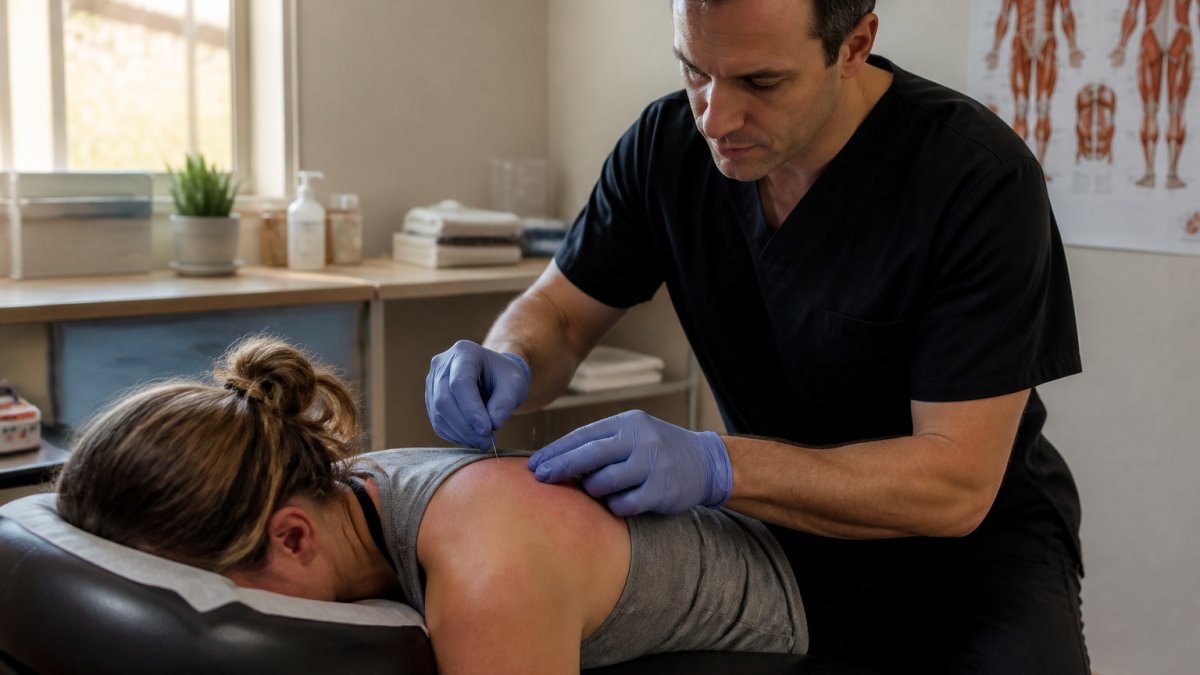
During treatment, you’ll lie in a comfortable position. The area being treated will be cleaned. The practitioner will locate the target muscle and insert the needle. Most people feel a slight prick when the needle enters the skin.
Once the needle is in place, you might feel a sensation called a “local twitch response.” This feels like a quick muscle contraction. Many practitioners believe this response indicates effective treatment. The sensation usually passes quickly.
Treatment sessions typically last 30 to 60 minutes, though the actual needling time is often shorter. The rest of the time involves assessment, discussion, and planning.
After treatment, mild soreness is common. Your muscle might feel tender or slightly bruised. This typically resolves within a day or two. Some people feel immediate relief. Others notice improvement over several days as the muscle responds to treatment.
Your practitioner should provide clear instructions about activity after treatment. Some recommend rest. Others suggest gentle movement. The guidance depends on your specific situation.
Ask your practitioner about expected outcomes before starting treatment. Honest experts will tell you what improvement looks like for your specific condition and roughly how long it might take.
Dry Needling vs. Acupuncture: Understanding the Difference
These techniques use similar tools, but they’re fundamentally different approaches. Understanding the distinction helps you make informed decisions about your care.
Acupuncture comes from traditional Chinese medicine. It’s based on concepts of energy flow and meridians. Practitioners train extensively in this traditional system. Treatment aims to balance the body’s energy.
Dry needling is based on Western anatomy and physiology. Practitioners target specific muscles and trigger points. The goal is to release muscle tension and reduce pain through a direct physiological response.
The training differs significantly. Acupuncturists study traditional theory extensively. Dry needling practitioners focus on anatomy, neurology, and muscle physiology. Both require certification, but the knowledge base is different.
For chronic pain from muscle tension and trigger points, dry needling can be an effective approach. For broader wellness and energy balance, some people prefer acupuncture. Many people benefit from both approaches at different times.
Your dry needling expert in Franklin can explain which approach suits your specific situation. They might recommend dry needling, acupuncture, or a combination of treatments.
Evaluating Treatment Plans and Experience
A quality treatment plan is personalized, not generic. Your practitioner should explain specifically why they’re recommending dry needling for your condition.
Ask to see the plan in writing. It should include:
- Your specific diagnosis or condition
- How many sessions are recommended
- What frequency (how often you’ll come in)
- What other treatments might complement dry needling
- Expected timeline for improvement
- How progress will be measured
A good practitioner revisits the plan regularly. If you’re not improving as expected, they adjust the approach. If you’re improving faster than anticipated, they might modify the plan accordingly.
Experience shows in how practitioners handle complications. Ask what they do if a patient experiences unexpected pain or doesn’t respond to treatment. Experienced practitioners have protocols for these situations.
Be cautious if a practitioner pressures you to commit to a large package of sessions upfront without reassessing your progress. Quality practitioners adjust plans based on how you’re actually responding to treatment.
Taking the Next Step
Learning how to find a dry needling expert in Franklin takes some effort, but it’s worth the time. You’re investing in your health and recovery.
Start by asking your primary care doctor for referrals. You can also ask your physical therapist or chiropractor for recommendations.
Check credentials carefully. Verify certifications through the organizations that issued them. Ask the questions outlined above. Trust your instincts about whether the practitioner listens and communicates clearly.
Dr. Gil Center for Back, Neck, and Chronic Pain Relief offers dry needling as part of comprehensive pain management. Our practitioners combine dry needling with other advanced therapies like Class IV laser therapy and therapeutic ultrasound. We create personalized treatment plans based on thorough evaluation of your specific condition. When you’re ready to explore how dry needling might help your pain, reach out to discuss your situation with our team.
The right expert makes all the difference in your recovery. Take time to find someone qualified, experienced, and genuinely interested in your individual needs.
Finding a dry needling expert in Franklin requires careful evaluation of credentials and communication style. When you’ve identified a qualified practitioner who listens to your concerns and explains their approach clearly, you’ve found someone worth trusting with your care. Dr. Gil Center for Back, Neck, and Chronic Pain Relief combines dry needling with personalized treatment planning and advanced therapies to address chronic pain comprehensively. Make An Appointment to discuss whether dry needling fits your recovery goals.
Frequently Asked Questions
What qualifications should I look for in a dry needling expert?
Look for practitioners who hold state licensure as a chiropractor, physical therapist, or nurse practitioner and have completed specialized dry needling training. Ask about their certification from recognized organizations and how many hours of formal dry needling education they’ve completed. Verify they maintain current credentials and participate in continuing education. A qualified dry needling expert should be transparent about their training background and willing to discuss their experience treating conditions similar to yours.
How can I verify a dry needling provider’s credentials?
Request to see their licenses and certifications directly. You can verify chiropractor licenses through the Tennessee Board of Chiropractic Examiners, physical therapist licenses through the Tennessee Board of Physical Therapy, and nurse practitioner credentials through the Tennessee Board of Nursing. Don’t hesitate to ask about their training institution and how recently they completed their certification.
What should I expect during a dry needling appointment?
Your first visit typically includes a comprehensive evaluation of your symptoms and medical history. The practitioner will examine the affected area and explain how dry needling may address your specific condition. During treatment, thin needles are inserted into targeted muscle areas, which may cause a mild sensation. Sessions usually last 15-30 minutes. You may experience some soreness afterward similar to post-workout muscle fatigue. Most practitioners discuss expected outcomes and how many sessions you might need before beginning treatment.
Is dry needling the same as acupuncture?
No. Dry needling is a Western medical technique based on anatomy and physiology, using the same needles as acupuncture but targeting specific muscle trigger points to reduce pain and improve function. Acupuncture is rooted in traditional Chinese medicine and focuses on balancing energy flow along meridian lines. While both use thin needles, the training, philosophy, and application methods differ significantly. Some practitioners offer both services, but they are distinct approaches to treatment.


