

Table of Contents
- What Class IV Laser Therapy Is and How It Works
- How Class IV Laser Therapy Reduces Pain and Inflammation
- Tissue Repair and Accelerated Healing
- Improved Circulation and Blood Flow
- What to Expect During Laser Therapy Sessions
- How Long Does a Laser Therapy Session Take
- Class IV Laser Therapy Side Effects and Safety Considerations
- Conditions Treated with Class IV Laser Therapy
- Frequently Asked Questions
Last Updated: October 13, 2026
What Class IV Laser Therapy Is and How It Works
Class IV laser therapy is a non-invasive treatment that uses high-intensity infrared light to stimulate cellular healing and reduce pain. At Dr.
Class IV laser light penetrates deeper than lower-class lasers, reaching tissues several centimeters below the skin’s surface, so treatment addresses pain and inflammation at their source rather than just superficial symptoms. Higher power output also lets clinicians treat larger areas in shorter timeframes.
Class IV laser therapy delivers treatment doses measured in joules per centimeter squared. Higher power output means shorter treatment sessions while maintaining therapeutic effect, a practical advantage for patients with demanding schedules.
How Class IV Laser Therapy Reduces Pain and Inflammation
Pain relief from class iv laser therapy occurs through multiple biological mechanisms. When laser energy reaches damaged tissues, it stimulates nitric oxide production, relaxing blood vessel walls and improving local circulation while reducing inflammatory markers that contribute to chronic pain.
The protocol typically involves multiple sessions over several weeks, each delivering a dose calibrated to the affected tissue type and depth. Many patients report noticeable pain reduction within the first few sessions, though full benefit develops as tissue repair accelerates.
Research from the National Institutes of Health on photobiomodulation documents how infrared light stimulates mitochondrial function, increasing cellular energy production. This enhanced cellular activity directly supports the inflammatory response resolution process.
Class IV laser therapy addresses pain at the cellular level by improving energy production in damaged tissues and reducing inflammatory markers simultaneously. This dual mechanism explains why many patients experience sustained relief rather than temporary symptom suppression.
Tissue Repair and Accelerated Healing
Tissue regeneration is one of the most significant benefits of class iv laser therapy for chronic conditions.
The wavelength penetration enables treatment of deep structures like intervertebral discs, ligaments, and nerve tissue. When these structures receive adequate blood flow and cellular energy, they can repair damage that would otherwise persist.
The healing response from class iv laser therapy is progressive: early sessions address acute inflammation and initiate cellular repair, while later sessions deepen tissue remodeling and strengthen structural integrity.
Improved Circulation and Blood Flow
Vascular function improvement is a direct result of class iv laser therapy’s mechanism of action. The treatment stimulates endothelial cells lining blood vessels to produce nitric oxide, causing vasodilation and improving blood flow.
Poor circulation is a common underlying factor in chronic pain. Tissues with inadequate blood flow become hypoxic and metabolically stressed, perpetuating inflammation and pain.
Patients often report warmer skin and improved mobility within hours of treatment, sensations that reflect genuine vascular changes at the tissue level.
What to Expect During Laser Therapy Sessions
A typical class iv laser therapy session begins with a brief assessment of your current pain level and any changes since the previous session.
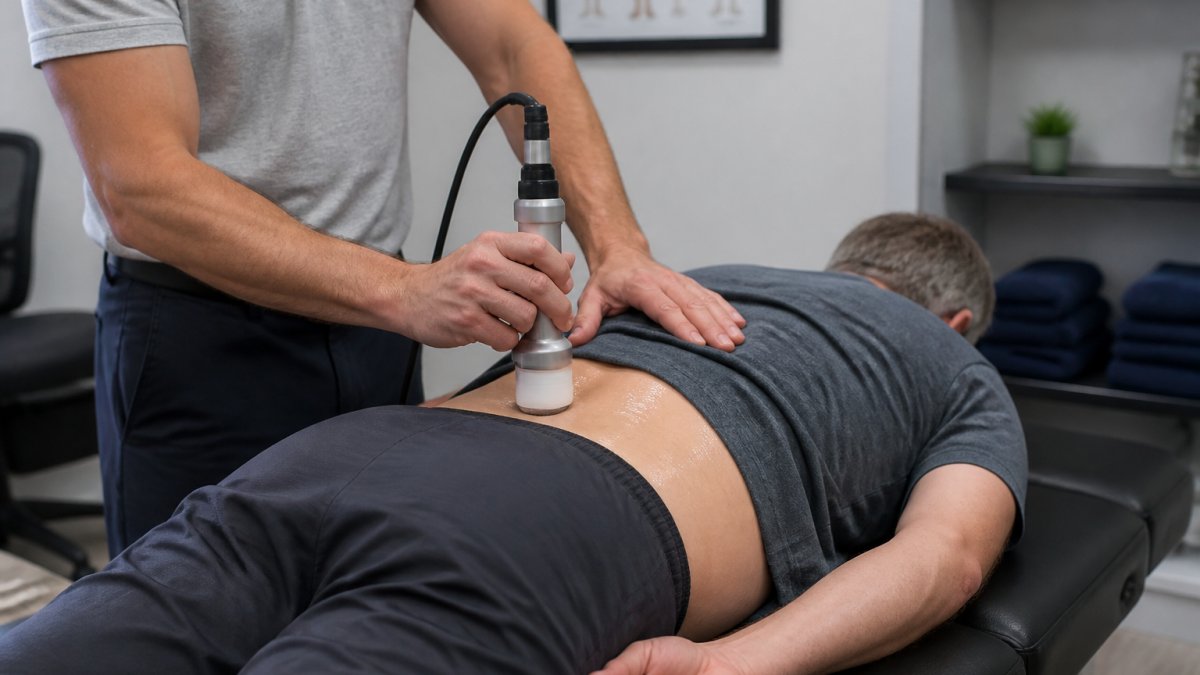
The treatment area is usually covered with a protective barrier, and both you and the provider wear safety eyewear.
During the session, you may notice mild tingling or deep warmth, and some patients experience immediate mild relief.
How Long Does a Laser Therapy Session Take
Session duration depends primarily on treatment area size and therapeutic dose. Smaller, localized areas like an elbow joint typically require 8 to 12 minutes of active treatment; larger regions such as the lower back or cervical spine usually require 15 to 20 minutes.
Total appointment time is longer than active laser time because it includes assessment, positioning, and post-treatment discussion, most patients spend 30 to 40 minutes at the clinic. Gil Center for Back, Neck, and Chronic Pain Relief designs treatment schedules that accommodate typical work and family commitments.
Session frequency typically follows 2 to 3 sessions per week initially, tapering to 1 per week as healing progresses, allowing tissues to respond without overwhelming the healing mechanism. Total courses usually span 4 to 8 weeks, varying by condition severity and individual response.
Skipping scheduled sessions or extending the interval between treatments can slow healing progress. Consistency matters because tissue repair requires sustained cellular stimulation. If scheduling conflicts arise, discuss alternatives with your provider rather than arbitrarily spacing sessions further apart.
Class IV Laser Therapy Side Effects and Safety Considerations
Class IV laser therapy is generally well-tolerated when delivered by a trained provider using a calibrated protocol, and most reported reactions are mild and short-lived. Knowing what is normal, what warrants a call to your provider, and who should not be treated helps ensure a safe course of care.
Common, Expected Reactions
The most frequently reported effects are temporary skin redness and warmth in the treated area, both fading within a few hours. Some patients describe mild next-day soreness similar to light exercise, which reflects the tissue’s response rather than injury. Less common reports include brief tingling, a transient headache when the neck or upper back is treated, or temporary changes in skin sensation.
Eye Safety: Why Protective Eyewear Is Not Optional
Class IV lasers operate at powers high enough to damage the retina if the beam enters the eye directly or reflects off a shiny surface (the FDA). That is why the patient and everyone in the treatment room wear wavelength-specific safety glasses for the entire session, not just while the handpiece is active. The risk comes from a direct or specular reflection, not the diffuse glow seen through the lenses. Providers keep reflective instruments, jewelry, and metal surfaces out of the beam path.
Who Should Not Be Treated
Some precautions are absolute and some are relative. Absolute contraindications generally include:
- Pregnancy over the abdomen, pelvis, or lower back, the effects on fetal tissue are not established, so treatment in these regions is avoided.
- Active malignancy in the treatment field, laser energy can stimulate cell activity, and until more is known, treating over a known tumor is avoided.
- Direct treatment over the eyes, thyroid, or active infection, these areas are either vulnerable or the treatment could worsen an existing process.
- Photosensitizing medications in the treatment area, certain drugs increase light sensitivity and raise the risk of a burn-like reaction.
Relative precautions, situations that call for a conversation with your provider rather than an automatic no, include:
- Implanted electronic devices such as pacemakers or spinal cord stimulators. Most modern devices are shielded, but the handpiece should not be applied directly over the generator.
- Implanted metal hardware. Titanium and stainless steel hardware is generally compatible, but the provider may adjust positioning to avoid heating the surrounding tissue.
- Uncontrolled seizure disorders. Some clinicians avoid treating the head and neck in these patients as a precaution.
- Tattoos in the treatment area. Dark ink can absorb more energy and cause discomfort or a minor burn.
- Blood thinners or bleeding disorders. Not a contraindication, but worth flagging so the provider can note any bruising.
When to Call Your Provider
Contact your provider if you notice blistering, a burn, redness lasting more than a day, new or worsening pain after a session, or any change in vision. These are uncommon but signal that the dose or protocol needs adjustment. A thorough intake, medication list, implant history, and recent imaging, lets a provider catch a relative precaution before it becomes a problem.
Do not schedule Class IV laser therapy without disclosing pregnancy status, implanted devices, photosensitizing medications, or a history of seizures. These are the details that change whether treatment is appropriate and how it should be delivered.
Conditions Treated with Class IV Laser Therapy
Class IV laser therapy is used across a wide range of musculoskeletal and pain conditions, but the strength of the evidence is not uniform. Some applications are supported by consistent clinical findings; others rest on smaller studies, case reports, or clinician experience. Knowing which is which, and how to tell whether treatment is working, matters more than a long list of conditions.
Where the Evidence Is Strongest
- Chronic low back pain. Multiple randomized trials and systematic reviews have examined laser therapy for chronic low back pain, with most finding short-term reductions in pain intensity and modest improvements in function when treatment is delivered at adequate doses (pubmed.ncbi.nlm.nih.gov). It is best used as part of a broader plan that includes exercise and activity modification.
- Knee osteoarthritis. Several trials report reduced pain and improved function scores after a course of treatment, though durability varies and some studies are limited by small sample sizes and inconsistent dosing.
- Neck pain and myofascial trigger points. Evidence supports short-term pain relief, particularly when laser therapy is combined with manual therapy or exercise.
- Tendinopathy. Achilles, patellar, and lateral elbow tendinopathy have been studied with generally favorable short-term results, though long-term outcomes are less clear.
Where the Evidence Is Preliminary
- Peripheral neuropathy. Some studies report reduced pain and improved sensation, but the evidence base is smaller and results are mixed. It is reasonable to consider as part of a multimodal plan, not as a standalone cure.
- Disc herniation and radicular pain. Case series and smaller trials suggest benefit, but high-quality randomized evidence is limited.
- Fibromyalgia and widespread pain. Results are inconsistent, and response varies widely between patients.
- Post-surgical swelling and scar tissue. Commonly used in practice, but the controlled evidence is thin.
Who Is a Reasonable Candidate
Laser therapy tends to be most appropriate for patients with a defined, localized musculoskeletal or neuropathic pain problem who have not responded adequately to conservative care such as activity modification, physical therapy, or over-the-counter medication, and who want to avoid or delay more invasive options.
Laser therapy is not a substitute for diagnosis. It does not correct a structural problem that requires surgery, and it does not replace appropriate treatment for an underlying condition such as infection, fracture, or malignancy.
How to Tell If It Is Working
Because response varies by condition and protocol, track concrete measures rather than relying on a general sense of feeling better:
- Pain score. Rate your pain on a 0-10 scale at the same time each day, before and after treatment.
- Function. Note how far you can walk, how long you can sit, or how many stairs you can climb without stopping.
- Range of motion. Ask your provider to measure it at the start and again after several sessions.
- Medication use. Track how often you reach for pain relievers.
A common pattern is noticeable improvement within the first three to five sessions, with continued gains over a full course. If there is no meaningful change after six to eight sessions, discuss with your provider whether to continue, adjust the protocol, or pursue a different approach.
Class IV laser therapy has the strongest supporting evidence for chronic low back pain, knee osteoarthritis, neck pain, and tendinopathy. For neuropathy, disc-related pain, and fibromyalgia, the evidence is more preliminary. Track pain scores, function, and medication use so you and your provider can judge whether it is working for you.
Frequently Asked Questions
How does Class IV laser therapy differ from lower-class lasers?
Class IV laser therapy uses higher power output and deeper wavelengths than Class III and lower-class lasers, allowing it to penetrate deeper into tissues and treat larger areas more effectively. Class IV systems deliver more laser energy to stimulate cellular activity and tissue repair in structures like muscles, tendons, and ligaments. Lower-class lasers have limited penetration depth and power, making them suitable for superficial conditions only. Class IV therapy is designed for more substantial pain relief and healing response in chronic and acute conditions.
What conditions can be treated with Class IV laser therapy?
Class IV laser therapy addresses a wide range of conditions including chronic back and neck pain, joint pain, muscle pain, neuropathy, epicondylitis (tennis elbow), muscle spasms, sciatica, and acute injuries. It is also used to promote wound healing and reduce scar tissue formation. The therapy works for both acute pain from recent injuries and chronic pain that has persisted for months or years. Your healthcare provider can evaluate whether Class IV therapy is appropriate for your specific condition during a consultation.
How many sessions are typically required for noticeable results?
The number of sessions varies depending on the condition, severity, and individual healing response. Some patients experience relief within a few sessions, while others may require multiple weeks of treatment to see significant improvement. Your treatment protocol will be customized to your needs. Consistent attendance and following the recommended session schedule typically produces better outcomes than sporadic treatment.
Is Class IV laser therapy safe, and what should I know about eye safety?
Class IV laser therapy is generally safe when administered by trained professionals who follow proper safety protocols. Protective eyewear is essential during treatment to prevent eye damage from the laser beam. Certain conditions, such as pregnancy, thyroid disorders, or the use of photosensitizing medications, may require special consideration. A qualified healthcare provider will review your medical history and discuss any contraindications before starting treatment.


