

Table of Contents
- What Non-Surgical Spinal Decompression Therapy Is
- How Spinal Decompression Therapy Works
- Pain Relief and Mobility Benefits
- Spinal Decompression Therapy vs Traction: Key Differences
- Spinal Decompression Therapy Treatment Duration and Timeline
- Spinal Decompression Therapy Risks and Side Effects
- Who Benefits Most and When to Avoid Treatment
- Choosing a Qualified Provider
- Frequently Asked Questions
Last Updated: October 12, 2026
What Non-Surgical Spinal Decompression Therapy Is
Spinal decompression therapy is a non-invasive treatment that uses controlled mechanical traction to gently stretch the spine and reduce pressure on compressed nerves and damaged discs. It aims to create negative pressure within the intervertebral discs, potentially allowing herniated or bulging disc material to retract and relieving nerve compression that causes pain.
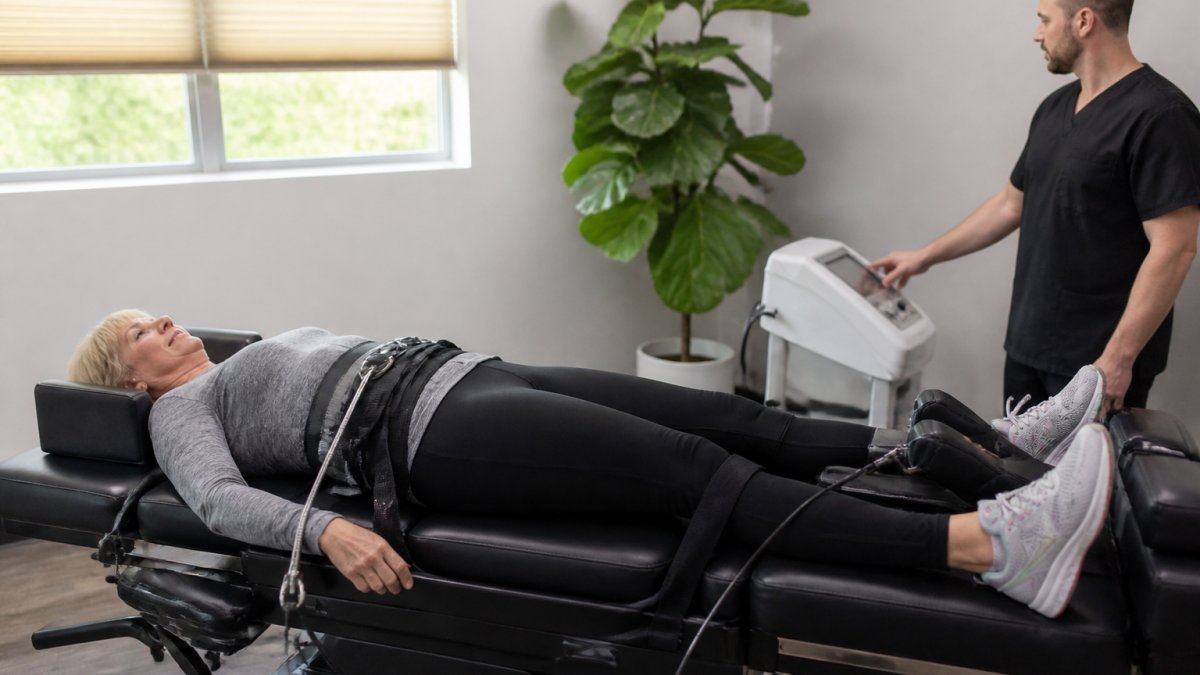
At Dr. Gil Center for Back, Neck, and Chronic Pain Relief, we work with patients seeking alternatives to surgery for disc-related conditions. The therapy positions the patient on a motorized decompression table that applies precise traction forces to specific spinal segments.
The treatment is designed for patients with conditions like herniated discs, bulging discs, degenerative disc disease, and nerve compression symptoms. Sessions typically last 30 minutes in an outpatient clinical setting, and most plans involve multiple sessions over several weeks, depending on your condition and response.
How Spinal Decompression Therapy Works
The mechanics of spinal decompression therapy center on creating negative pressure, also called distraction, within the intervertebral discs.
The negative pressure created may also improve blood circulation and oxygen supply to the discs and surrounding tissues. Discs receive nutrients through diffusion, and the intermittent traction, alternating between tension and relaxation phases, appears to work with your body’s natural healing mechanisms.
The therapy is distinct from traditional traction because it uses precise computerized control to target specific spinal levels and adjust force gradually. A qualified provider programs the table based on your diagnosis, spine anatomy, and tolerance, minimizing muscle guarding that can resist the stretch and reduce effectiveness.
The intermittent decompression approach differs fundamentally from continuous traction. Intermittent cycles allow your muscles to relax between phases, reducing the protective muscle tension that often limits treatment response.
Pain Relief and Mobility Benefits
Relief from Back Pain and Disc Pressure
Many patients with chronic lower back pain report symptom improvement through spinal decompression therapy, particularly when pain originates from disc-related conditions. The reduction in disc pressure may alleviate pain radiating into the buttocks, hips, or legs by addressing the underlying mechanical cause rather than just masking pain.
Patients often notice improvements in daily activities. Bending, lifting, or sitting for extended periods may become more tolerable as nerve compression decreases, with the goal of functional improvement rather than just temporary relief.
Neck Pain and Nerve Compression Relief
Cervical spine conditions, including herniated discs and nerve compression in the neck, frequently cause radiating pain into the shoulders, arms, and hands. Spinal decompression therapy applied to the cervical spine may reduce this pain by relieving pressure on cervical nerve roots, with patients reporting improved neck mobility and less numbness or tingling in the upper extremities.
The neck region requires especially precise treatment because the cervical spine is more delicate than the lumbar spine. Qualified providers adjust traction force and angle to safely decompress cervical discs, and many patients find improved cervical alignment and reduced nerve compression translate to better sleep and fewer tension headaches.
Both lower back and neck pain rooted in disc pressure or nerve compression may respond to decompression therapy because the treatment addresses the mechanical cause rather than just symptoms.
Spinal Decompression Therapy vs Traction: Key Differences
While both spinal decompression therapy and traditional traction involve stretching the spine, the terminology is often used loosely. “Spinal decompression” is not a single regulated procedure with one universal definition; in practice, it describes a category of motorized, computer-controlled traction devices, and different clinics may use the term for equipment with meaningfully different capabilities.
| Aspect | Motorized Spinal Decompression | Traditional Traction |
|---|---|---|
| Force Application | Intermittent, computerized cycles with programmable hold and rest phases | Continuous or static pull, sometimes manually adjusted |
| Targeting | Programmed for specific spinal levels and patient tolerance | Often applied to a region rather than a precise segment |
| Muscle Response | Cycling is designed to reduce protective muscle guarding | Sustained pull can trigger muscle guarding |
| Session Length | Commonly around 30 minutes | Varies widely by setting and technique |
| Proposed Mechanism | Aims to create negative intradiscal pressure and unload compressed structures | Applies sustained longitudinal pulling force |
| Evidence Base | Growing but limited; study designs vary and results are not uniform | Long-established in rehabilitation, with mixed evidence for disc-related pain |
Traditional traction applies a steady pulling force, which can prompt muscles to tense and resist the stretch, a protective response called muscle guarding. Motorized decompression cycles between tension and relaxation phases, intended to let muscles relax, and computerized programming lets a provider adjust force based on your response and comfort.
What the Terminology Does and Does Not Establish
The word “decompression” sounds like a guaranteed mechanical outcome, but the evidence does not support treating it as one. Clinical research on motorized spinal decompression is limited, and studies vary in size, design, and how they measure improvement. Some trials report meaningful pain reduction for disc-related low back pain, while others show results similar to conventional traction or conservative care, with a common pattern of short-term symptom improvement and less certainty about long-term outcomes.
That does not mean the treatment is without value. The honest framing is that motorized decompression is a plausible, generally low-risk conservative option that some patients respond to, not a procedure with a guaranteed mechanism of disc retraction in every case. Imaging changes are not consistently demonstrated, and symptom relief can occur even when disc appearance on MRI does not change.
When a provider describes decompression, ask what specific device is used, whether it is motorized and programmable, and how they track your response. The answers tell you more than the label on the brochure.
Be cautious of any claim that decompression “rehydrates” or “regrows” discs as a certainty. Those statements go beyond what current evidence can support. A provider who explains uncertainty honestly is generally a better sign than one who promises a specific result.
The practical difference between motorized decompression and ordinary traction is in the control and cycling of force, not in a guaranteed outcome. Treat the distinction as a difference in approach, not proof of superiority.
Spinal Decompression Therapy Treatment Duration and Timeline
Treatment duration varies depending on condition severity, symptom duration, and how your body responds. A typical plan involves 20 to 30 sessions over 4 to 6 weeks, though some patients require fewer or extended protocols.
Each session lasts approximately 30 minutes. Most plans start at 3 to 5 sessions per week, then taper to 2 weekly as symptoms improve, allowing your body time to respond between sessions while maintaining consistent therapeutic stimulus.
Many patients report initial symptom improvement within 2 to 3 weeks, though meaningful functional gains often take 4 to 6 weeks.
Spinal decompression therapy is not a quick fix. The goal is sustained improvement in pain and function, and patients who commit to the full protocol and follow lifestyle modifications typically see better outcomes than those who stop early.
Spinal Decompression Therapy Risks and Side Effects
Spinal decompression therapy is generally well-tolerated, but like any medical treatment, it carries potential risks and side effects. Go into treatment knowing which conditions require extra caution and what a proper screening evaluation should include.
Common, Usually Temporary Effects
Mild muscle soreness or stiffness after a session is the most frequently reported effect, similar to unfamiliar exercise. Some patients notice a temporary pain increase during the first few sessions as tissues adjust, which typically eases as treatment continues. Less common reports include mild headache, fatigue, or transient dizziness after cervical treatment. These effects are usually short-lived but should be reported so force and positioning can be adjusted.
Contraindications and Conditions Requiring Screening
Certain conditions make spinal decompression therapy inappropriate or require careful medical clearance before starting. A thorough provider screens for these before the first session:
- Severe osteoporosis or significant bone density loss, increased risk of compression fracture under traction force.
- Spinal fracture, recent or healing, traction can destabilize a healing injury.
- Active spinal infection or malignancy, treatment may be inappropriate and could delay necessary care.
- Severe spinal stenosis with bony compression, when nerve compression comes from bone overgrowth rather than disc material, decompression is unlikely to help and may aggravate symptoms.
- Pregnancy, abdominal positioning and traction forces are generally avoided.
- Anticoagulant use or bleeding disorders, any spinal treatment carries a theoretical bleeding risk that warrants medical discussion.
- Recent spinal surgery or spinal instrumentation, hardware and healing tissue require surgeon clearance.
- Severe cardiovascular disease or uncontrolled hypertension, positioning and table motion may need medical clearance.
- Abdominal aortic aneurysm or other vascular conditions, positioning considerations apply.
Age alone is not a contraindication. Many patients over 50 benefit, though age-related changes such as advanced arthritis or reduced bone density can affect suitability. A thorough evaluation, including imaging review, medical history, physical examination, and nerve function assessment, is essential to determine candidacy.
When Treatment Does Not Help
Some patients complete a full course without meaningful improvement. Reasons vary: some conditions do not respond to mechanical unloading, some have a structural cause decompression cannot address, and some require surgical consultation. Set a defined reassessment point, often after a few weeks, and decide together whether to continue, modify, or stop treatment.
Certain conditions, including severe spinal fractures, active infections, malignancy, and severe osteoporosis, may make spinal decompression therapy inappropriate or risky. Your provider should screen for contraindications before beginning treatment, and you should disclose all medications, prior surgeries, and imaging results.
Ask your provider directly which contraindications they screened for and how they will reassess your progress. A clear answer is a sign of appropriate care; a vague one is a reason to get a second opinion.
Who Benefits Most and When to Avoid Treatment
Spinal decompression therapy shows the most consistent results for patients with disc-related pain, bulging discs, herniated discs, or mild degenerative disc disease, where nerve compression is the primary pain source.
Patients who have not benefited from conservative treatments like physical therapy or anti-inflammatory medications may be good candidates, particularly if they want to avoid surgery. Those with chronic pain lasting months or years, where disc pathology is confirmed through imaging, often see meaningful improvement.
Conversely, certain patients should avoid spinal decompression therapy or discuss it carefully with a qualified provider. Patients with severe osteoporosis face increased fracture risk. Those with active spinal infections, malignancy, or severe spinal stenosis where bone overgrowth compresses nerves may not benefit.
Choosing a Qualified Provider
Selecting the right provider significantly influences treatment outcomes. A qualified provider should have specific training and certification in spinal decompression therapy, not just general chiropractic or physical therapy credentials.
Look for providers who thoroughly evaluate your condition: imaging review, detailed history, physical examination, and nerve function assessment. Red flags include recommending treatment without proper evaluation or guaranteeing results.
At Dr.
Ask potential providers about their experience with your specific condition and how they adjust treatment based on patient response.
Chronic back and neck pain rooted in disc compression or nerve irritation significantly impacts quality of life and limits your ability to work and enjoy activities.
Frequently Asked Questions
How does non-surgical spinal decompression therapy work to relieve pain?
Non-surgical spinal decompression therapy uses a motorized table to gently stretch the spine, creating negative pressure within intervertebral discs. This reduces pressure on compressed nerves and bulging or herniated discs, allowing increased blood circulation and nutrient delivery to damaged tissues. The gradual decompression force encourages disc material to retract, reducing nerve irritation and radiating pain without surgical intervention.
What conditions can spinal decompression therapy help treat?
Spinal decompression therapy may help with degenerative disc disease, bulging or herniated discs, sciatica, chronic back pain, chronic neck pain, and nerve compression symptoms. It is designed for disc-related conditions where conservative treatment and physical therapy alone have not provided adequate relief. A qualified healthcare provider can determine whether your specific condition is suitable for this treatment approach.
What are the risks or side effects of spinal decompression therapy?
Most patients tolerate spinal decompression therapy well with minimal side effects. Some experience temporary muscle soreness or mild discomfort during initial sessions. Contraindications include pregnancy, severe osteoporosis, spinal fusion hardware, and certain fractures. Patients with these conditions should not undergo treatment. Discuss your full medical history with a qualified provider to ensure treatment is appropriate and safe for your situation.
How long does spinal decompression therapy take to work?
Treatment duration varies based on your condition and severity. Most patients undergo multiple sessions over several weeks to months. Some experience pain relief within the first few sessions, while others require longer treatment periods to achieve meaningful improvement. A personalized treatment plan from your provider will outline the expected timeline and number of sessions needed for your specific situation.


